

- 100% accuracy of data
- 24/7 scientific support
- 0% tolerance in quality of product
Stock Locations
- New Jersey, USA
- Czech Republic, EUIn stock
* Stock subject to availability.
Documentation
Includes: HPLC, MASS/LC-MS, 1H NMR, FT-IR, Potency, Structure Elucidation Report (SER), and additional analytical data depending on the product.
2771193-12-3
Carbinoxamine Related Compound C (Oxalate Salt)
● In Stock
| Catalogue No.: | VE007985 |
|---|---|
| CAS No.: | 2771193-12-3 |
| Mol. Formula: | C16H20N2O · C2H2O4 |
| Mol. Weight: | 346.38 g/mol |
For laboratory use only: analytical, development and regulatory purposes. Supplied in mg quantities. Not for human or veterinary use.
Request a quote for a set
- Request quote for this set
All USP impurities of Carbinoxamine
5 productsSee the 5 products
- Carbinoxamine Related Compound A VE0020610
CAS 6318-51-0 - Carbinoxamine Related Compound B VE008605
CAS 27652-89-7 - Carbinoxamine Related Compound C VL4700001
- Carbinoxamine Related Compound C (Oxalate Salt) VE007985
CAS 2771193-12-3 - Doxylamine EP Impurity C (Free Base) VL38003
CAS 1221-70-1
- Carbinoxamine Related Compound A VE0020610
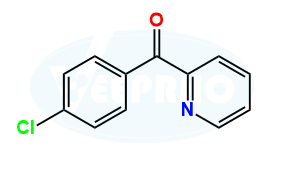

Additional information on CAS 2771193-12-3
| Parent drug | Carbinoxamine |
|---|---|
| Product type | Impurity standards |
| IUPAC name | N,N-Dimethyl-2-[phenyl(pyridin-2-yl)methoxy]ethan-1-amine oxalate |
| USP name | Carbinoxamine related compound C |
| CHNS Ratio (%) (calculated) | C 62.42 · H 6.40 · N 8.09 · S 0.00 |
| Description | Carbinoxamine related compound C (oxalate salt), CAS 2771193-12-3, is a defined process- and degradation-related impurity associated with the carbinoxamine antihistamine scaffold. The material corresponds to the oxalate salt of a basic aminoalkyl ether species, with molecular formula C16H20N2O · C2H2O4 and molecular weight 346.38 g/mol. Its occurrence is typically traced to incomplete synthetic conversion, side-chain rearrangement, or hydrolytic transformation during manufacture and storage. Because structurally related impurities can influence safety margins, characterization commonly relies on LC-MS/MS, high-resolution MS, and HPLC with orthogonal impurity profiling; GC-MS may support volatile residue assessment when required. |
Request a Quote
"*" indicates required fields
Other products related to Carbinoxamine impurities
| Impurity structure | Name of Impurity | Catalogue No. |
|---|---|---|
| Carbinoxamine Related Compound A | VE0020610 | |
| Carbinoxamine Related Compound B | VE008605 | |
 | Carbinoxamine Related Compound C | VL4700001 |
| Doxylamine EP Impurity C (Free Base) | VL38003 | |
| Carbinoxamine N-Oxide | VE0013216 | |
| N-Nitroso Desmethyl Carbinoxamine | VE0020614 |