
- 100% accuracy of data
- 24/7 scientific support
- 0% tolerance in quality of product
Stock Locations
- New Jersey, USA
- Czech Republic, EU
* Stock subject to availability.
Documentation
Includes: HPLC, MASS/LC-MS, 1H NMR, FT-IR, Potency, Structure Elucidation Report (SER), and additional analytical data depending on the product.
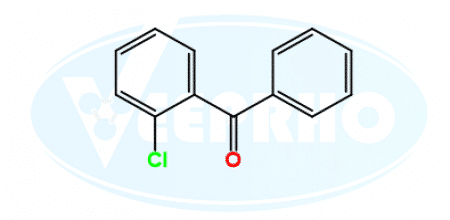
Clotrimazole EP Impurity E
● In Stock
| Catalogue No.: | VL164002 |
|---|---|
| CAS No.: | N/A |
| Mol. Formula: | C13H9ClO |
| Mol. Weight: | 216.66 g/mol |
For laboratory use only: analytical, development and regulatory purposes. Supplied in mg quantities. Not for human or veterinary use.
Request a quote for a set
- Request quote for this set
All EP impurities of Clotrimazole
6 productsSee the 6 products
- Clotrimazole EP Impurity A (Free Base) VL164001
CAS 66774-02-5 - Clotrimazole EP Impurity B VL164004
CAS 23593-71-7 - Clotrimazole EP Impurity C VL164007
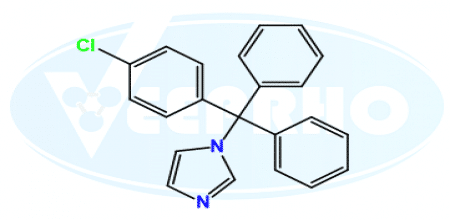
CAS 42074-68-0 - Clotrimazole EP Impurity E VL164002
- Clotrimazole EP Impurity F VL164003
CAS 15469-97-3 - Enalapril EP Impurity I VL1360009
CAS 288-32-4
- Clotrimazole EP Impurity A (Free Base) VL164001


Additional information on Clotrimazole EP Impurity E
| Parent drug | Clotrimazole |
|---|---|
| Product type | Impurity standards |
| IUPAC name | (2-Chlorophenyl)(phenyl)methanone |
| EP name | Clotrimazole EP Impurity E |
| CHNS Ratio (%) (calculated) | C 72.07 · H 4.19 · N 0.00 · S 0.00 |
| References | Lee | Tae-Kyung | et al. “A New Method for the Preparation of 2-Chlorotrityl Resin and Its Application to Solid-Phase Peptide Synthesis.â€Â Tetrahedron Letters | vol. 48 | no. 3 | Jan. 2007 | pp. 389–91 | https://doi.org/10.1016/j.tetlet.2006.11.071. |
| Description | Clotrimazole EP Impurity E (CAS 5162-03-08) is a chlorinated aromatic degradation-related impurity associated with the imidazole antifungal clotrimazole. With molecular formula C13H9ClO and molecular weight 216.66 g/mol, it represents a low-polarity aryl ether fragment that may arise from synthetic side reactions or oxidative cleavage of the parent trityl-imidazole scaffold. Its structural assignment requires orthogonal characterization by LC-MS/MS, high-resolution MS, and ideally NMR to resolve positional isomerism and trace-level coelution. In regulatory contexts, such impurities are evaluated under pharmacopeial impurity frameworks and ICH Q3A/Q3B principles, with attention to process-related origin and impurity profiling. |
Request a Quote
"*" indicates required fields
Other products related to Clotrimazole impurities
| Impurity structure | Name of Impurity | Catalogue No. |
|---|---|---|
| Clotrimazole EP Impurity A (Free Base) | VL164001 | |
| Clotrimazole EP Impurity B | VL164004 | |
| Clotrimazole EP Impurity C | VL164007 | |
| Clotrimazole EP Impurity F | VL164003 | |
| (2-Chlorophenyl)diphenylmethane | VE0022433 | |
| (2-Chlorophenyl)diphenylmethyl Ethyl Ether | VE0022444 | |
| 1-((2-chlorophenyl)diphenylmethyl)-2-methyl-1H-imidazole | VE008713 | |
| 1-chloro-2-(dichloromethyl)benzene | VE008712 | |
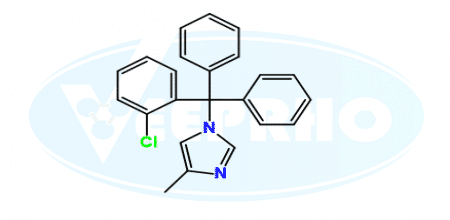 | 4-methyl-1H-imidazole Clotrimazole | VE009136 |
| Clotrimazole Impurity 1 | VE0013858 | |
| Clotrimazole Impurity 7 | VE0013857 | |
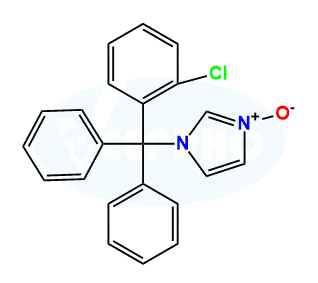 | Clotrimazole N-Oxide | VE0013859 |