
- 100% accuracy of data
- 24/7 scientific support
- 0% tolerance in quality of product
Mutagenicity assessment (ICH M7)
Treated as a potentially non-mutagenic impurity (ICH M7 Class 4–5).
Computational (in silico) assessmentStock Locations
- New Jersey, USA
- Czech Republic, EUIn stock
* Stock subject to availability.
Documentation
Includes: HPLC, MASS/LC-MS, 1H NMR, FT-IR, Potency, Structure Elucidation Report (SER), and additional analytical data depending on the product.
938-94-3
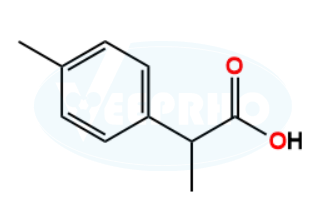
Ibuprofen EP Impurity D
● In Stock
| Catalogue No.: | VL81005 |
|---|---|
| CAS No.: | 938-94-3 |
| Mol. Formula: | C10H12O2 |
| Mol. Weight: | 164.2 g/mol |
For laboratory use only: analytical, development and regulatory purposes. Supplied in mg quantities. Not for human or veterinary use.
Request a quote for a set
- Request quote for this set
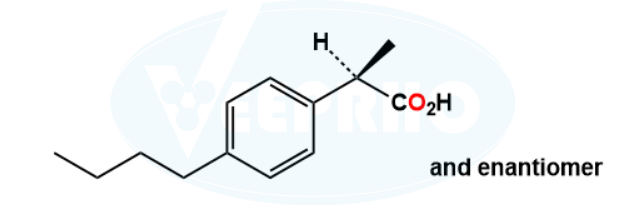
All EP impurities of Ibuprofen
19 productsSee the 19 products
- Ibuprofen EP Impurity A VL81002
CAS 66622-47-7 - Ibuprofen EP Impurity B VL81001
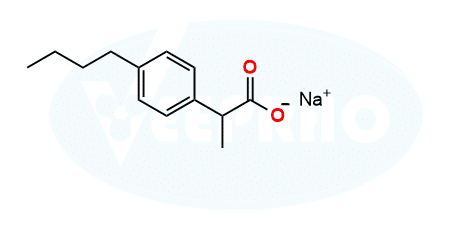
CAS 3585-49-7 - Ibuprofen EP Impurity B (Na Salt) VE0015196
- Ibuprofen EP Impurity C VL81004
CAS 59512-17-3 - Ibuprofen EP Impurity D VL81005
CAS 938-94-3 - Ibuprofen EP Impurity E VL81006
CAS 38861-78-8 - Ibuprofen EP Impurity F VL81010
CAS 65322-85-2 - Ibuprofen EP Impurity G VE006272
CAS 1391054-15-1 - Ibuprofen EP Impurity H VE006273
CAS 2143535-25-3 - Ibuprofen EP Impurity I VE006274
CAS 2143535-26-4 - Ibuprofen EP Impurity J VL81003
CAS 65813-55-0 - Ibuprofen EP Impurity L VL81007
CAS 53949-53-4 - Ibuprofen EP Impurity M VL81008
CAS 60057-62-7 - Ibuprofen EP Impurity N VL81009
CAS 3585-52-2 - Ibuprofen EP Impurity O VL81011
CAS 64451-76-9 - Ibuprofen EP Impurity P VL81022
CAS 36039-36-8 - Ibuprofen EP Impurity Q VL81020
CAS 36039-35-7 - Ibuprofen EP Impurity R VE006275
CAS 102120-87-6 - Ibuprofen EP Impurity K VL81021
CAS 43153-07-7
- Ibuprofen EP Impurity A VL81002

Additional information on CAS 938-94-3
| Parent drug | Ibuprofen |
|---|---|
| Product type | Impurity standards |
| IUPAC name | (2RS)-2-(4-Methylphenyl)propanoic acid |
| EP name | Ibuprofen EP Impurity D |
| Other Synonyms | 2-(4-Methylphenyl)propanoic acid; 2-(p-Tolyl)propanoic acid; 2-(P-TOLYL)PROPIONIC ACID; alpha,4-Dimethylphenylacetic acid; alpha,4-Dimethylbenzeneacetic acid; a,4-Dimethylphenylacetic acid; (+/-)-2-(P-METHYLPHENYL)PROPIONIC ACID |
| SMILES | CC1=CC=C(C=C1)C(C)C(=O)O |
| InChI | InChI=1S/C10H12O2/c1-7-3-5-9(6-4-7)8(2)10(11)12/h3-6,8H,1-2H3,(H,11,12) |
| InChIKey | KDYOFXPLHVSIHS-UHFFFAOYSA-N |
| CHNS Ratio (%) (calculated) | C 73.15 · H 7.37 · N 0.00 · S 0.00 |
| Shipping condition | Ambient Temperature |
| Description | Ibuprofen EP Impurity D, CAS 938-94-3, corresponds to 2-(4-Methylphenyl)propanoic acid, a positional isomer of ibuprofen with formula C10H12O2 and molecular weight 164.2 g/mol. This arylpropionic acid impurity may arise from synthetic isomer formation or incomplete control of regioselective alkylation steps during manufacture. It is not a nitrosamine or mutagenic species, but its presence is relevant to impurity profiling and compositional conformance in pharmacopeial materials. Definitive identification typically relies on HPLC with diode array detection, LC-MS/MS for mass confirmation, and GC-MS when volatility or derivatization permits structural discrimination. |
Request a Quote
"*" indicates required fields