

- 100% accuracy of data
- 24/7 scientific support
- 0% tolerance in quality of product
Stock Locations
- New Jersey, USA
- Czech Republic, EU
* Stock subject to availability.
Documentation
Includes: HPLC, MASS/LC-MS, 1H NMR, FT-IR, Potency, Structure Elucidation Report (SER), and additional analytical data depending on the product.
14205-39-1
Nifedipine EP Impurity D
● In Stock
| Catalogue No.: | VL1170004 |
|---|---|
| CAS No.: | 14205-39-1 |
| Mol. Formula: | C5H9NO2 |
| Mol. Weight: | 115.13 g/mol |
For laboratory use only: analytical, development and regulatory purposes. Supplied in mg quantities. Not for human or veterinary use.
Request a quote for a set
- Request quote for this set
All EP impurities of Nifedipine
4 productsSee the 4 products
- Nifedipine EP impurity A VL1170002
CAS 67035-22-7 - Nifedipine EP Impurity B VL1170001
CAS 50428-14-3 - Nifedipine EP Impurity C VL1170003
CAS 39562-27-1 - Nifedipine EP Impurity D VL1170004
CAS 14205-39-1
- Nifedipine EP impurity A VL1170002

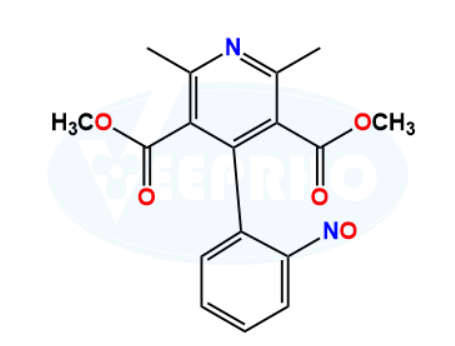
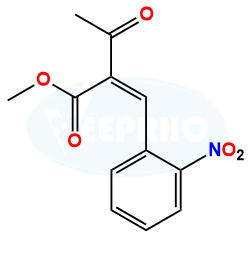
Additional information on CAS 14205-39-1
| Parent drug | Nifedipine |
|---|---|
| Product type | Impurity standards |
| IUPAC name | Methyl 3-aminobut-2-enoate |
| EP name | Nifedipine EP Impurity D |
| CHNS Ratio (%) (calculated) | C 52.16 · H 7.88 · N 12.17 · S 0.00 |
| References | Zaid | Nurzati Amani Mohamed | et al. Synthesis and Characterization v-Ketoamine Ligands. 2018 | https://doi.org/10.1063/1.5028012.?Sorkin | E. M. | et al. “Nifedipine a Review of Its Pharmacodynamic and Pharmacokinetic Properties | and Therapeutic Efficacy | in Ischaemic Heart Disease | Hypertension and Related Cardiovascular Disorders.†Drugs | vol. 30 | no. 3 | Sept. 1985 | pp. 182–274 | https://doi.org/10.2165/00003495-198530030-00002.? |
| Description | Nifedipine EP Impurity D, CAS 14205-39-1, is the pyrrolidinone-related degradant 2-pyrrolidone, a low-molecular-weight lactam with formula C5H9NO2 and molecular weight 115.13 g/mol. In the impurity profile of nifedipine, such a species is associated with decomposition of nitrogen-containing synthetic intermediates or ancillary solvent-derived contaminants rather than the dihydropyridine core itself. Because of its polarity, volatility, and limited UV response, trace measurement generally requires LC-MS/MS, GC-MS, or headspace GC techniques, often with derivatization when matrix effects are significant. Its presence is assessed within impurity qualification and stability studies under pharmacopeial and ICH impurity frameworks. |
Request a Quote
"*" indicates required fields
Other products related to Nifedipine impurities
| Impurity structure | Name of Impurity | Catalogue No. |
|---|---|---|
| N-Nitroso Nifedipine EP Impurity D | VE0024807 | |
| Nifedipine EP impurity A | VL1170002 | |
| Nifedipine EP Impurity B | VL1170001 | |
| Nifedipine EP Impurity C | VL1170003 | |
| 2-Nitrobenzaldehyde | VE009550 | |
| N-Nitroso Nifedipine | VE0011075 | |
| Nifedipine Amide Impurity | VE0017449 | |
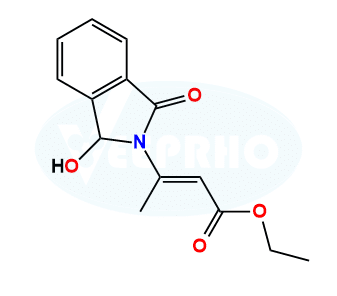 | Nifedipine Impurity 19 | VE0017452 |
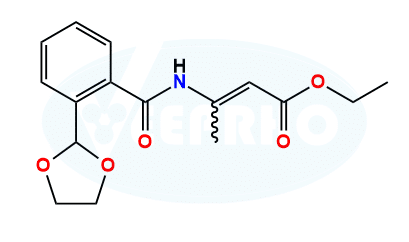 | Nifedipine Impurity 23 | VE0017454 |
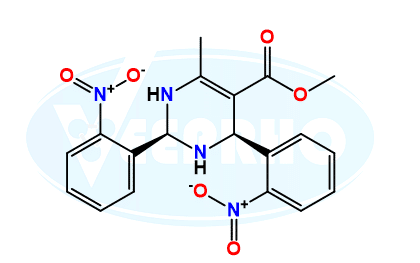 | Nifedipine Pyrimidine Impurity | VL1170005 |
Show all related products N-Nitroso Nifedipine impurities (2)