

- 100% accuracy of data
- 24/7 scientific support
- 0% tolerance in quality of product
Stock Locations
- New Jersey, USA
- Czech Republic, EUIn stock
* Stock subject to availability.
Documentation
Includes: HPLC, MASS/LC-MS, 1H NMR, FT-IR, Potency, Structure Elucidation Report (SER), and additional analytical data depending on the product.
110374-16-8
Omeprazole EP Impurity B
● In Stock
| Catalogue No.: | VL112003 |
|---|---|
| CAS No.: | 110374-16-8 |
| Mol. Formula: | C16H17N3O2S |
| Mol. Weight: | 315.39 g/mol |
For laboratory use only: analytical, development and regulatory purposes. Supplied in mg quantities. Not for human or veterinary use.
Request a quote for a set
- Request quote for this set
All EP impurities of Omeprazole
12 productsSee the 12 products
- Esomeprazole EP Impurity F VL112015
CAS 161796-77-6 - Omeprazole EP Impurity A VL112002
CAS 37052-78-1 - Omeprazole EP Impurity B VL112003
CAS 110374-16-8 - Omeprazole EP Impurity C VL112004
CAS 73590-85-9 - Omeprazole EP Impurity D VL112001
CAS 88546-55-8 - Omeprazole EP Impurity E VL112005
CAS 176219-04-8 - Omeprazole EP Impurity F VE0010595
CAS 125656-82-8 - Omeprazole EP Impurity G VE0010150
CAS 125656-83-9 - Omeprazole EP Impurity H VL112007
CAS 863029-89-4 - Omeprazole EP Impurity I VL112008
CAS 158812-85-2 - Omeprazole EP Impurity XI VL112010
CAS 86604-75-3 - (R)-Omeprazole VE006621
CAS 119141-89-8
- Esomeprazole EP Impurity F VL112015
- Request quote for this set
All USP impurities of Omeprazole
9 productsSee the 9 products
- Omeprazole EP Impurity A VL112002
CAS 37052-78-1 - Omeprazole EP Impurity B VL112003
CAS 110374-16-8 - Omeprazole EP Impurity C VL112004
CAS 73590-85-9 - Omeprazole EP Impurity D VL112001
CAS 88546-55-8 - Omeprazole EP Impurity E VL112005
CAS 176219-04-8 - Omeprazole EP Impurity F VE0010595
CAS 125656-82-8 - Omeprazole EP Impurity G VE0010150
CAS 125656-83-9 - Omeprazole EP Impurity H VL112007
CAS 863029-89-4 - Omeprazole EP Impurity I VL112008
CAS 158812-85-2
- Omeprazole EP Impurity A VL112002


Additional information on CAS 110374-16-8
| Parent drug | Omeprazole |
|---|---|
| Product type | Impurity standards |
| IUPAC name | 2-[(RS)-[(3,5-dimethylpyridin-2-yl)methyl]sulphinyl]-5-methoxy-1H-benzimidazole |
| EP name | Omeprazole EP Impurity B/ Esomeprazole EP Impurity B |
| USP name | Desmethoxy Omeprazole |
| SMILES | COc1ccc2[nH]c([S+]([O-])Cc3ncc(C)cc3C)nc2c1 |
| InChIKey | ZMXZYNHJPJEPAE-UHFFFAOYSA-N |
| CHNS Ratio (%) (calculated) | C 60.93 · H 5.43 · N 13.32 · S 10.17 |
| References | Zanitti | Leo | et al. “Direct HPLC Enantioseparation of Omeprazole and Its Chiral Impurities: Application to the Determination of Enantiomeric Purity of Esomeprazole Magnesium Trihydrate.†Journal of Pharmaceutical and Biomedical Analysis | vol. 52 | no. 5 | Sept. 2010 | pp. 665–71 | https://doi.org/10.1016/j.jpba.2010.02.021. ?Pinheiro | Fernanda C. | et al. “Elemental Impurities Analysis in Name-Brand and Generic Omeprazole Drug Samples.†Heliyon | vol. 6 | no. 2 | Feb. 2020 | p. e03359 | https://doi.org/ |
| Description | Omeprazole EP Impurity B, also designated Esomeprazole EP Impurity B, Omeprazole BP Impurity B, and desmethoxy omeprazole, corresponds to CAS 110374-16-8 and has formula C16H17N3O2S with molecular weight 315.39 g/mol. Structurally, it is a benzimidazole sulfoxide related impurity arising from incomplete O-demethylation control or related synthetic side reactions during omeprazole and esomeprazole manufacture. Its presence is monitored as a process-related impurity and potential degradant within pharmacopeial specifications. Because of close structural similarity to the parent actives, definitive characterization commonly requires LC-MS/MS and orthogonal LC-UV methods, with NMR used for structural confirmation and impurity profiling. |
Request a Quote
"*" indicates required fields
Other products related to Omeprazole impurities
| Impurity structure | Name of Impurity | Catalogue No. |
|---|---|---|
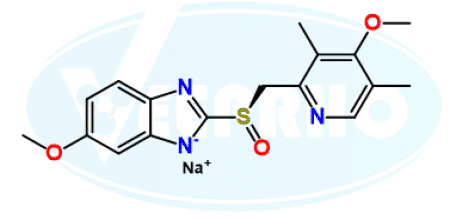 | Esomeprazole EP Impurity F | VL112015 |
| N-Nitroso Omeprazole EP Impurity I | VE0024736 | |
| Omeprazole EP Impurity A | VL112002 | |
| Omeprazole EP Impurity C | VL112004 | |
| Omeprazole EP Impurity D | VL112001 | |
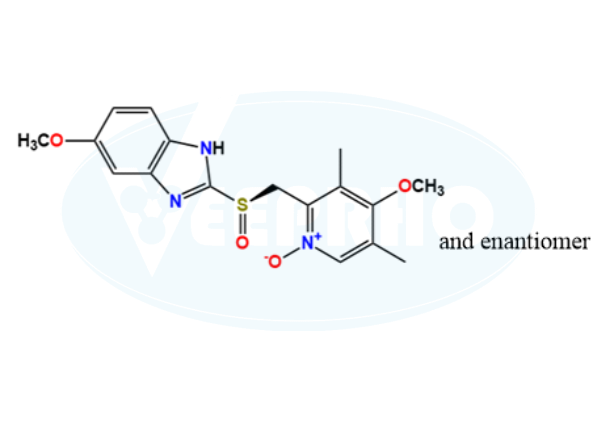 | Omeprazole EP Impurity E | VL112005 |
| Omeprazole EP Impurity F | VE0010595 | |
| Omeprazole EP Impurity G | VE0010150 | |
| Omeprazole EP Impurity H | VL112007 | |
| Omeprazole EP Impurity I | VL112008 | |
| Omeprazole EP Impurity XI | VL112010 | |
| Omeprazole Related Compound 7 | VE0019182 |
Show all related products N-Nitroso Omeprazole impurities (2)