
- 100% accuracy of data
- 24/7 scientific support
- 0% tolerance in quality of product
Stock Locations
- New Jersey, USA
- Czech Republic, EUIn stock
* Stock subject to availability.
Documentation
Includes: HPLC, MASS/LC-MS, 1H NMR, FT-IR, Potency, Structure Elucidation Report (SER), and additional analytical data depending on the product.
176219-04-8
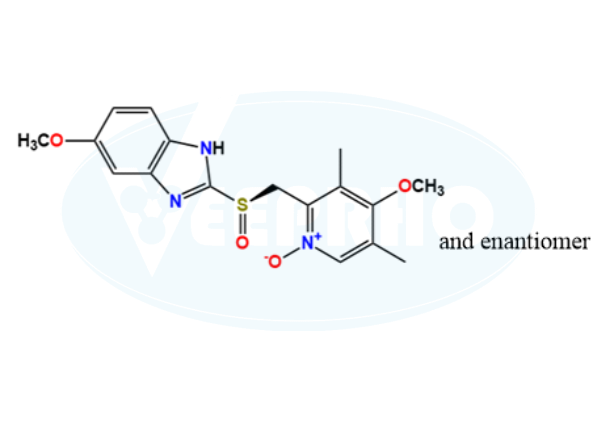
Omeprazole EP Impurity E
● In Stock
| Catalogue No.: | VL112005 |
|---|---|
| CAS No.: | 176219-04-8 |
| Mol. Formula: | C17H19N3O4S |
| Mol. Weight: | 361.42 g/mol |
For laboratory use only: analytical, development and regulatory purposes. Supplied in mg quantities. Not for human or veterinary use.
Packs and prices
| Pack | Price | Qty |
|---|---|---|
| 100 mg | USD 374.25 |
Prices shown are valid for issuing a purchase order.
Prices are subject to change depending on compound availability and the cost of synthesis based on current raw material costs. Veeprho reserves the right to change prices without notice.
Need another pack size or quantity? Request a custom quoteHow can we help?
Request a quote for a set
- Request quote for this set
All EP impurities of Omeprazole
12 productsSee the 12 products
- Esomeprazole EP Impurity F VL112015
CAS 161796-77-6 - Omeprazole EP Impurity A VL112002
CAS 37052-78-1 - Omeprazole EP Impurity B VL112003
CAS 110374-16-8 - Omeprazole EP Impurity C VL112004
CAS 73590-85-9 - Omeprazole EP Impurity D VL112001
CAS 88546-55-8 - Omeprazole EP Impurity E VL112005
CAS 176219-04-8 - Omeprazole EP Impurity F VE0010595
CAS 125656-82-8 - Omeprazole EP Impurity G VE0010150
CAS 125656-83-9 - Omeprazole EP Impurity H VL112007
CAS 863029-89-4 - Omeprazole EP Impurity I VL112008
CAS 158812-85-2 - Omeprazole EP Impurity XI VL112010
CAS 86604-75-3 - (R)-Omeprazole VE006621
CAS 119141-89-8
- Esomeprazole EP Impurity F VL112015
- Request quote for this set
All USP impurities of Omeprazole
9 productsSee the 9 products
- Omeprazole EP Impurity A VL112002
CAS 37052-78-1 - Omeprazole EP Impurity B VL112003
CAS 110374-16-8 - Omeprazole EP Impurity C VL112004
CAS 73590-85-9 - Omeprazole EP Impurity D VL112001
CAS 88546-55-8 - Omeprazole EP Impurity E VL112005
CAS 176219-04-8 - Omeprazole EP Impurity F VE0010595
CAS 125656-82-8 - Omeprazole EP Impurity G VE0010150
CAS 125656-83-9 - Omeprazole EP Impurity H VL112007
CAS 863029-89-4 - Omeprazole EP Impurity I VL112008
CAS 158812-85-2
- Omeprazole EP Impurity A VL112002


Additional information on CAS 176219-04-8
| Parent drug | Omeprazole |
|---|---|
| Product type | Impurity standards |
| IUPAC name | 4-Methoxy-2-[[(RS)-(5-methoxy-1H-benzimidazol-2-yl)sulfinyl]methyl]-3,5-dimethylpyridine 1-oxide |
| EP name | Omeprazole EP Impurity E / Esomeprazole EP Impurity E |
| USP name | Omeprazole Related Compound E; Omeprazole N-Oxide |
| Pharmacopeial synonyms | Omeprazole BP Impurity E ;Omeprazole Related Compound E; Esomeprazole EP Impurity E; Omeprazole N-Oxide |
| Other Synonyms | 5-Methoxy-2-[[(4-methoxy-3,5-dimethyl-2-pyridinyl)methyl]sulfinyl]-1H-benzimidazole N-oxide; 6-methoxy-2-[(4-methoxy-3,5-dimethyl-1-oxidopyridin-1-ium-2-yl)methylsulfinyl]-1H-benzimidazole |
| SMILES | O=S(C1=NC2=CC=C(OC)C=C2N1)CC3=C(C)C(OC)=C(C)C=[N+]3[O- |
| InChI | InChI=1S/C17H19N3O4S/c1-10-8-20(21)15(11(2)16(10)24-4)9-25(22)17-18-13-6-5-12(23-3)7-14(13)19-17/h5-8H,9H2,1-4H3,(H,18,19) |
| CHNS Ratio (%) (calculated) | C 56.50 · H 5.30 · N 11.63 · S 8.87 |
| Shipping condition | Ambient Temperature |
| Description | Omeprazole EP Impurity E, also designated Omeprazole BP Impurity E, Omeprazole Related Compound E, Esomeprazole EP Impurity E, and Omeprazole N-Oxide, is the N-oxide oxidation product of the benzimidazole-pyridine sulfide framework associated with proton pump inhibitors. CAS 176219-04-8; molecular formula C17H19N3O4S; molecular weight 361.42 g/mol. This impurity may arise during oxidative stress, storage, or synthetic manipulation of omeprazole and esomeprazole. Its structure is typically monitored in pharmacopeial impurity profiling by LC-MS/MS and LC-UV, with confirmatory characterization by HRMS or NMR. Although not a nitrosamine, its presence reflects oxidative degradation pathways relevant to stability specifications. |
Request a Quote
"*" indicates required fields
Other products related to Omeprazole impurities
| Impurity structure | Name of Impurity | Catalogue No. |
|---|---|---|
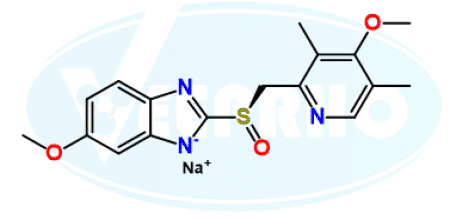 | Esomeprazole EP Impurity F | VL112015 |
| N-Nitroso Omeprazole EP Impurity I | VE0024736 | |
| Omeprazole EP Impurity A | VL112002 | |
| Omeprazole EP Impurity B | VL112003 | |
| Omeprazole EP Impurity C | VL112004 | |
| Omeprazole EP Impurity D | VL112001 | |
| Omeprazole EP Impurity F | VE0010595 | |
| Omeprazole EP Impurity G | VE0010150 | |
| Omeprazole EP Impurity H | VL112007 | |
| Omeprazole EP Impurity I | VL112008 | |
| Omeprazole EP Impurity XI | VL112010 | |
| Omeprazole Related Compound 7 | VE0019182 |
Show all related products N-Nitroso Omeprazole impurities (2)