

- 100% accuracy of data
- 24/7 scientific support
- 0% tolerance in quality of product
Stock Locations
- New Jersey, USA
- Czech Republic, EUIn stock
* Stock subject to availability.
Documentation
Includes: HPLC, MASS/LC-MS, 1H NMR, FT-IR, Potency, Structure Elucidation Report (SER), and additional analytical data depending on the product.
6781-17-5
Tamsulosin EP Impurity F
● In Stock
| Catalogue No.: | VL269003 |
|---|---|
| CAS No.: | 6781-17-5 |
| Mol. Formula: | C10H15NO2 |
| Mol. Weight: | 181.23 g/mol |
For laboratory use only: analytical, development and regulatory purposes. Supplied in mg quantities. Not for human or veterinary use.
Packs and prices
| Pack | Price | Qty |
|---|---|---|
| 100 mg | USD 129.00 |
Prices shown are valid for issuing a purchase order.
Prices are subject to change depending on compound availability and the cost of synthesis based on current raw material costs. Veeprho reserves the right to change prices without notice.
Need another pack size or quantity? Request a custom quoteHow can we help?
Request a quote for a set
- Request quote for this set
All EP impurities of Tamsulosin
16 productsSee the 16 products
- Tamsulosin EP Impurity A VL269011
CAS 918867-88-6 - Tamsulosin EP Impurity A (HCl Salt) VE0021107
- Tamsulosin EP Impurity B (Free Base) VE007380
CAS 112101-81-2 - Tamsulosin EP Impurity B (HCl salt) VL269001
CAS 112101-75-4 - Tamsulosin EP Impurity C VL269004
CAS 2244986-82-9 - Tamsulosin EP Impurity C (HCl Salt) VE0021120
CAS 2724727-15-3 - Tamsulosin EP Impurity D (Free Base) VL269005
CAS 1799280-05-9 - Tamsulosin EP Impurity D(HCl Salt) VE0021122
CAS 1798904-07-0 - Tamsulosin EP Impurity E VL269002
CAS 105764-07-6 - Tamsulosin EP Impurity F VL269003
CAS 6781-17-5 - Tamsulosin EP Impurity F (HCl Salt) VE0021123
CAS 1051368-80-9 - Tamsulosin EP Impurity G VL269012
CAS 106463-19-8 - Tamsulosin EP Impurity G (Free Base) VE0015573
CAS 106138-88-9 - Tamsulosin EP Impurity H (Free Base) VE008308
CAS 1329611-47-3 - Tamsulosin EP Impurity H (HCl salt ) VL269010
- Tamsulosin EP Impurity I VE008309
CAS 3259-03-8
- Tamsulosin EP Impurity A VL269011

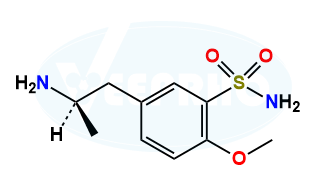
Additional information on CAS 6781-17-5
| Parent drug | Tamsulosin |
|---|---|
| Product type | Impurity standards |
| IUPAC name | 2-(2-Ethoxyphenoxy)ethanamine |
| EP name | Tamsulosin EP Impurity F |
| Other Synonyms | 2-(o-ethoxyphenoxy)ethylamine; 1-(2-aminoethoxy)-2-ethoxybenzene;2-(2-ethoxyphenoxy)-1-ethanamine |
| SMILES | CCOC1=CC=CC=C1OCCN |
| InChI | InChI=1S/C10H15NO2/c1-2-12-9-5-3-4-6-10(9)13-8-7-11/h3-6H,2,7-8,11H2,1H3 |
| InChIKey | OOKCBENPEIHOJG-UHFFFAOYSA-N |
| CHNS Ratio (%) (calculated) | C 66.27 · H 8.34 · N 7.73 · S 0.00 |
| Shipping condition | Ambient Temperature |
| Description | Tamsulosin EP Impurity F (CAS 6781-17-5), 2-(o-ethoxyphenoxy)ethylamine, is an amine-type process and degradation impurity encountered during tamsulosin synthesis and storage; its polar basic character influences retention and peak shape in reversed-phase chromatography and requires tailored HPLC and LC-MS methods for accurate quantification in impurity profiling and batch release testing. Control strategies include optimized synthetic steps, targeted purification such as ion exchange and preparative HPLC, and validated stability-indicating analytical procedures aligned with ICH Q3A/Q3B to maintain acceptable limits. Use of a certified reference standard ensures reliable detection, impurity clearance assessment, and regulatory compliance for API quality. |
Request a Quote
"*" indicates required fields
Other products related to Tamsulosin impurities
| Impurity structure | Name of Impurity | Catalogue No. |
|---|---|---|
| Tamsulosin EP Impurity A | VL269011 | |
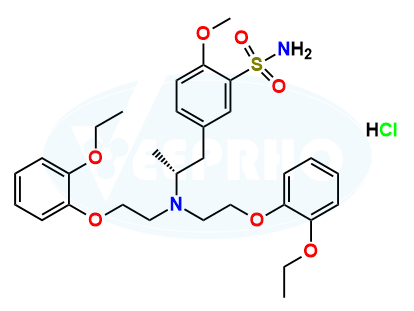 | Tamsulosin EP Impurity A (HCl Salt) | VE0021107 |
| Tamsulosin EP Impurity B (Free Base) | VE007380 | |
| Tamsulosin EP Impurity B (HCl salt) | VL269001 | |
| Tamsulosin EP Impurity C | VL269004 | |
 | Tamsulosin EP Impurity C (HCl Salt) | VE0021120 |
| Tamsulosin EP Impurity D (Free Base) | VL269005 | |
| Tamsulosin EP Impurity D(HCl Salt) | VE0021122 | |
| Tamsulosin EP Impurity E | VL269002 | |
| Tamsulosin EP Impurity F (HCl Salt) | VE0021123 | |
| Tamsulosin EP Impurity G | VL269012 | |
| Tamsulosin EP Impurity G (Free Base) | VE0015573 |
Show all related products N-Nitroso Tamsulosin impurities (2)