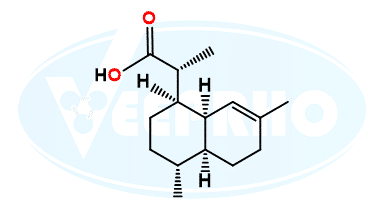
Artemisinin and its semisynthetic derivatives are a group of drugs used in the treatment of malaria due to Plasmodium falciparum. It was discovered in 1972 by Tu Youyou, who shared the 2015 Nobel Prize in Physiology or Medicine for her discovery. Artemisinin is a sesquiterpene lactone containing a 1,2,4-trioxane (endoperoxide) moiety, molecular formula C15H22O5 and molecular weight 282.33 g mol 1; the endoperoxide bridge is essential for antiplasmodial activity. The class is typified by rapid onset of parasiticidal activity and short plasma half life, and clinically important semisynthetic members include dihydroartemisinin, artesunate, artemether and arteether which are converted in vivo to the active dihydroartemisinin metabolite. Mechanistically the peroxide is activated by ferrous iron or heme released during hemoglobin digestion, generating carbon centered radicals that alkylate and damage parasite proteins and membranes; the result is fast reduction of parasite biomass, which is why these agents are used in combination therapies to prevent recrudescence and limit resistance. Standard analytical characterization employs HPLC with UV or MS detection, NMR for structural confirmation and stability testing under controlled conditions to monitor peroxide integrity.

Parent: Artemisinin

Parent: Artemisinin

Parent: Artemisinin

Parent: Artemisinin

Parent: Artemisinin
Impurities and related compounds that cooccur with artemisinin depend on source and manufacturing route, and include artemisitene, artemisinic acid, artemisinic alcohol, arteannuin B, deoxyartemisinin and residual semisynthetic derivatives or precursors; trace amounts of these are common in plant extracts while purified API shows much lower levels. Typical high quality artemisinin API assays are above 95 percent by HPLC; individual related substances in well purified material are commonly below about 0.1 to 0.5 percent w w and total related substances are generally maintained below about 1 to 2 percent w w, whereas crude botanical extracts can contain several percent of specific congeners. Other controlled quality attributes include residual solvents, water content and heavy metals, and impurity profiling relies on validated HPLC MS methods and impurity identification by NMR as needed.
Artemisinin and its derivatives are used to treat Plasmodium falciparum malaria, usually as part of artemisinin based combination therapies to achieve rapid parasite clearance and reduce the risk of resistance.
The endoperoxide bridge in artemisinin is activated by ferrous iron or heme from parasite hemoglobin digestion, producing reactive radicals that alkylate and damage parasite proteins and membranes, causing rapid parasite death.
It was discovered in 1972 by Tu Youyou, who shared the 2015 Nobel Prize in Physiology or Medicine for her discovery.
Artemisinin is also referred to as qinghaosu in Chinese, and related compounds or derivatives are commonly named dihydroartemisinin, artesunate, artemether or arteether depending on the semisynthetic modification.