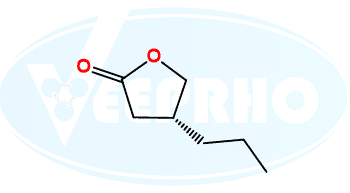
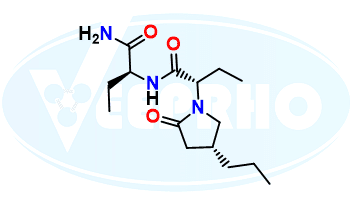
Brivaracetam, popularly sold under the brand name Briviact, is a pharmaceutical compound primarily utilized for the treatment of epilepsy. It functions as a selective synaptic vesicle protein 2A ligand and high-affinity binding sites in the human brain. This means Brivaracetam performs as an effective antiepileptic drug (AED) by specifically targeting affected areas of the human brain. It has an empirical formula of C₁₁H₂₀N₂O₂ and a molecular weight of 212.29. Approved since 2016 by the Food and Drug Administration, Brivaracetam is produced and marketed by UCB Pharma, a global biopharma company headquartered in Belgium.

Parent: Brivaracetam

Parent: Brivaracetam

Parent: Brivaracetam

Parent: Brivaracetam

Parent: Brivaracetam

Parent: Brivaracetam

Parent: Brivaracetam
Parent: Brivaracetam

Parent: Brivaracetam
Parent: Brivaracetam
![(2R)-2-[(4R)-2-Oxo-4-propylpyrrolidin-1-yl]butanamide](https://veeprho.com/wp-content/uploads/2026/08/2R-2-4R-2-Oxo-4-propylpyrrolidin-1-ylbutanamide-357337-00-9-VE0010072-1241.png "(2R)-2-[(4R)-2-Oxo-4-propylpyrrolidin-1-yl]butanamide")
Parent: Brivaracetam
![(2S)-2-[(4S)-2-Oxo-4-propylpyrrolidin-1-yl]butanoic Acid](https://veeprho.com/wp-content/uploads/2022/08/2S-2-4S-2-Oxo-4-propylpyrrolidin-1-yl-butanoic-Acid.png "(2S)-2-[(4S)-2-Oxo-4-propylpyrrolidin-1-yl]butanoic Acid")
Parent: Brivaracetam
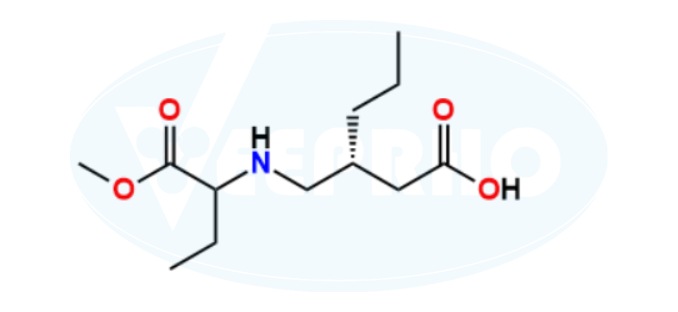
Parent: Brivaracetam

Parent: Levetiracetam/ Brivaracetam
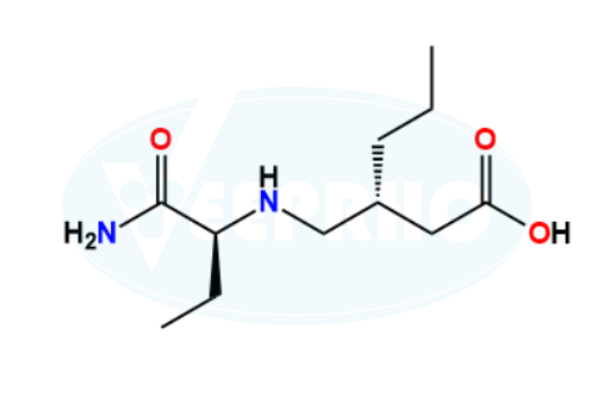
Parent: Brivaracetam

Parent: Brivaracetam

Parent: Brivaracetam

Parent: Brivaracetam

Parent: Brivaracetam

Parent: Brivaracetam
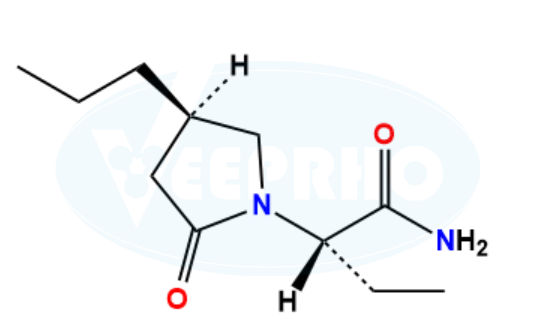
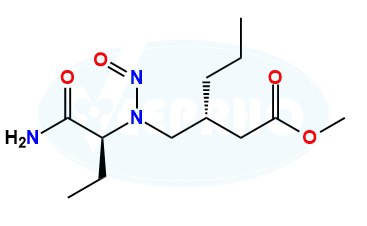
Impurities found in Brivaracetam are in minute quantities, typically less than 0.1%. They usually comprise related substances like the associated isomers, degradation products, or transformation compounds. The synthetically generated impurities include intermediates used during the manufacturing process of Brivaracetam. All these impurities are rigorously tested and kept well under acceptable limits as defined by regulatory bodies. Tests like high-performance liquid chromatography (HPLC) and gas chromatography (GC) are extensively used to quantify these impurities and related compounds.
Brivaracetam is primarily used to treat partial-onset seizures in people with epilepsy. It is an anticonvulsant medication known to reduce the frequency of seizure episodes.
Both levetiracetam and brivaracetam are anticonvulsant drugs used to treat epilepsy, but they differ in their mechanism of action. Brivaracetam has a high binding affinity towards SV2A in the brain, allowing it to selectively target the treatment areas, whilst levetiracetam has a lower affinity.
No, brivaracetam is not a sedative. It is, however, an antiepileptic drug that can cause side effects such as drowsiness or fatigue. A medical professional should be consulted for any feelings of sedation.
Brivaracetam is a selective, high-affinity synaptic vesicle protein 2A ligand that is believed to exercise its anticonvulsant effect by modulating neurotransmitter release. This action mechanism allows it to contribute significantly to seizure reductions.