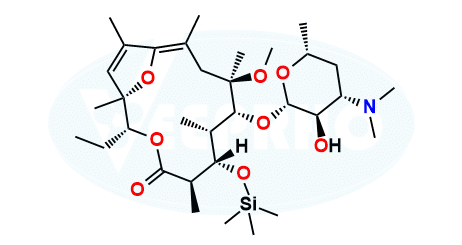
Clarithromycin is a macrolide antibiotic used to treat bacterial infections in various parts of the body. It is also prescribed in combination with other medications to treat duodenal ulcers caused by Helicobacter pylori and to prevent and treat Mycobacterium avium complex (MAC) infections, particularly in immunocompromised individuals. Clarithromycin works by inhibiting bacterial protein synthesis, preventing the growth and spread of bacteria.

Parent: Clarithromycin

Parent: Clarithromycin

Parent: Clarithromycin

Parent: Clarithromycin

Parent: Clarithromycin

Parent: Clarithromycin
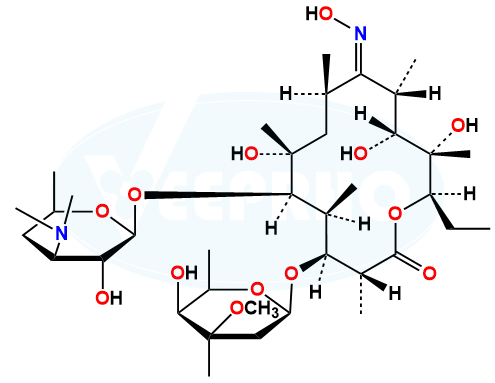
Parent: Clarithromycin/ Erythromycin/ Roxithromycin

Parent: Clarithromycin

Parent: Clarithromycin

Parent: Clarithromycin

Parent: Clarithromycin
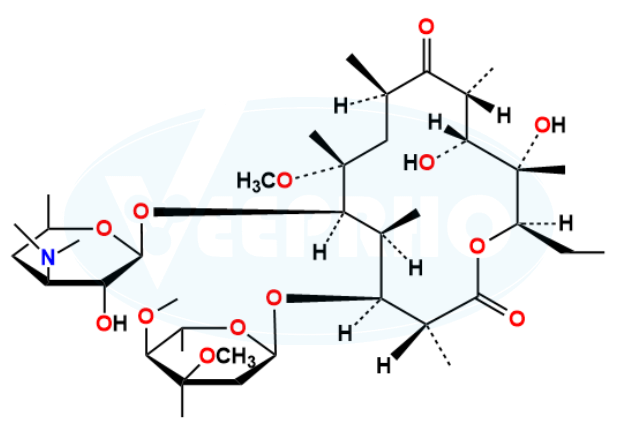
Parent: Clarithromycin

Parent: Clarithromycin

Parent: Clarithromycin

Parent: Clarithromycin

Parent: Clarithromycin

Parent: Clarithromycin
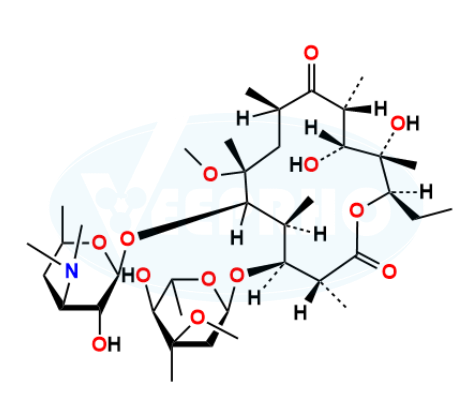
Parent: Clarithromycin

Parent: Clarithromycin

Parent: Clarithromycin

Parent: Clarithromycin
Impurities in Clarithromycin can arise from chemical synthesis, degradation, or storage conditions. Regulatory agencies such as the FDA, ICH, and EMA enforce strict impurity limits to ensure product safety and efficacy.
Process-Related Impurities
• Unreacted intermediates from chemical synthesis
• Residual solvents (e.g., methanol, ethanol, dichloromethane)
• By-products from macrolide fermentation
Degradation Impurities
• Oxidation products due to light or oxygen exposure
• Hydrolysis impurities caused by moisture
• Thermal degradation products from high-temperature storage
Elemental Impurities
• Heavy metals from catalysts used in synthesis
• Trace levels of arsenic, cadmium, lead, and mercury
Analytical Techniques for Impurity Detection
• High-Performance Liquid Chromatography (HPLC)
• Gas Chromatography (GC)
• Mass Spectrometry (MS)
• Fourier-Transform Infrared Spectroscopy (FT-IR)
Yes, Clarithromycin is considered a strong, broad-spectrum antibiotic effective against a wide range of bacterial infections, including respiratory tract infections, skin infections, and Helicobacter pylori infections.
Clarithromycin is used to treat:
• Respiratory tract infections (pneumonia, bronchitis, sinusitis, pharyngitis)
• Skin and soft tissue infections
• Helicobacter pylori infections (used in combination therapy for duodenal ulcers)
• Mycobacterium avium complex (MAC) infections (especially in immunocompromised patients)
• Tonsillitis and ear infections (otitis media)
No, Clarithromycin and Amoxicillin are different types of antibiotics:
• Clarithromycin – A macrolide antibiotic, effective against atypical bacteria and used in H. pylori treatment.
• Amoxicillin – A penicillin-class antibiotic, primarily used for respiratory, urinary, and ear infections.
Sometimes, both are used together for H. pylori eradication therapy.
Common side effects include:
• Gastrointestinal issues – Nausea, diarrhea, vomiting, abdominal pain
• Taste changes – Metallic or bitter taste in the mouth
• Headache and dizziness
• Liver enzyme elevation – Rare but possible in long-term use
• QT prolongation – May cause irregular heart rhythms, especially in patients with heart disease