

- 100 % Datengenauigkeit
- Wissenschaftlicher Support rund um die Uhr
- 0 % Toleranz bei der Produktqualität
Lagerstandorte
- New Jersey, USA
- Tschechien, EUAuf Lager
* Bestand vorbehaltlich Verfügbarkeit.
Dokumentation
Enthält: HPLC, MASS/LC-MS, 1H-NMR, FT-IR, Gehalt, Structure Elucidation Report (SER) sowie zusätzliche analytische Daten je nach Produkt.
127252-80-6
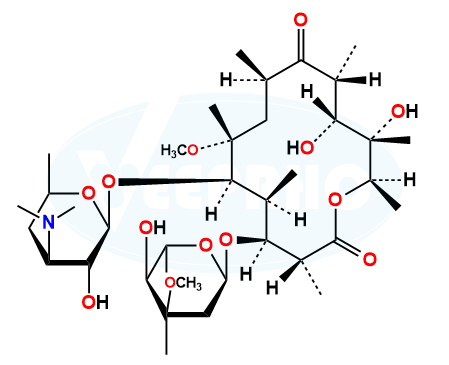
Clarithromycin EP Impurity O
● Auf Lager
| Katalog-Nr.: | VL740015 |
|---|---|
| CAS-Nr.: | 127252-80-6 |
| Summenformel: | C39H72N2O13 |
| Molare Masse: | 776.99 g/mol |
For laboratory use only: analytical, development and regulatory purposes. Supplied in mg quantities. Not for human or veterinary use.
Angebot für ein Set anfordern
- Angebot für dieses Set anfragen
Alle EP-Verunreinigungen von Clarithromycin
16 ProdukteDie 16 Produkte ansehen
- Clarithromycin EP Impurity A VL740014
CAS 124412-58-4 - Clarithromycin EP Impurity B VE009557
CAS 299409-85-1 - Clarithromycin EP Impurity C VL740001
CAS 127253-06-9 - Clarithromycin EP Impurity D VL740002
CAS 101666-68-6 - Clarithromycin EP Impurity E VL740009
CAS 81103-14-2 - Clarithromycin EP Impurity F VL740004
CAS 128940-83-0 - Clarithromycin EP Impurity H VL740006
CAS 127140-69-6 - Clarithromycin EP Impurity J VL740012
CAS 111321-02-9 - Clarithromycin EP Impurity K VL740010
CAS 127157-35-1 - Clarithromycin EP Impurity M VL740003
CAS 127182-43-8 - Clarithromycin EP Impurity O VL740015
CAS 127252-80-6 - Clarithromycin EP Impurity P VL740016
CAS 123967-58-8 - Clarithromycin EP Impurity Q VL740013
CAS 118074-07-0 - Clarithromycin Impurity G VL740008
CAS 127182-44-9 - Clarithromycin Impurity I VL740007
CAS 118058-74-5 - Clarithromycin Impurity N VL740011
CAS 144604-03-5
- Clarithromycin EP Impurity A VL740014
- Angebot für dieses Set anfragen
Alle USP-Verunreinigungen von Clarithromycin
17 ProdukteDie 17 Produkte ansehen
- Clarithromycin EP Impurity A VL740014
CAS 124412-58-4 - Clarithromycin EP Impurity B VE009557
CAS 299409-85-1 - Clarithromycin EP Impurity C VL740001
CAS 127253-06-9 - Clarithromycin EP Impurity D VL740002
CAS 101666-68-6 - Clarithromycin EP Impurity E VL740009
CAS 81103-14-2 - Clarithromycin EP Impurity F VL740004
CAS 128940-83-0 - Clarithromycin EP Impurity H VL740006
CAS 127140-69-6 - Clarithromycin EP Impurity J VL740012
CAS 111321-02-9 - Clarithromycin EP Impurity K VL740010
CAS 127157-35-1 - Clarithromycin EP Impurity L VL740005
CAS 127253-05-8 - Clarithromycin EP Impurity M VL740003
CAS 127182-43-8 - Clarithromycin EP Impurity O VL740015
CAS 127252-80-6 - Clarithromycin EP Impurity P VL740016
CAS 123967-58-8 - Clarithromycin EP Impurity Q VL740013
CAS 118074-07-0 - Clarithromycin Impurity G VL740008
CAS 127182-44-9 - Clarithromycin Impurity I VL740007
CAS 118058-74-5 - Clarithromycin Impurity N VL740011
CAS 144604-03-5
- Clarithromycin EP Impurity A VL740014

Zusätzliche Informationen zu CAS 127252-80-6
| Wirkstoff | Clarithromycin |
|---|---|
| Produkttyp | Verunreinigungsstandards |
| IUPAC-Name | 6-O-Methylerythromycin A (Z)-9-(O-methyloxime) |
| Name im EP | Clarithromycin EP Impurity O |
| Name in der USP | Clarithromycin Impurity O |
| CHNS-Verhältnis (%) (berechnet) | C 60.29 · H 9.34 · N 3.61 · S 0.00 |
| Referenzen | WATANABE, YOSHIAKI, et al. “Chemical Modification of Erythromycins. IX. Selective Methylation at the C-6 Hydroxyl Group of Erythromycin a Oxime Derivatives and Preparation of Clarithromycin.†The Journal of Antibiotics, vol. 46, no. 4, 1993, pp. 647–60, https://doi.org/10.7164/antibiotics.46.647. WASHINGTON, JOHN A., and WALTER R. WILSON. “Erythromycin: A Microbial and Clinical Perspective after 30 Years of Clinical Use (First of Two Parts).†Mayo Clinic Proceedings, vol. 60, no. 3, Mar. 1985, pp. 189–203, https://doi.org/10.1016/s0025-6196(12)60219-5. ‌ |
| Beschreibung | Clarithromycin EP Impurity O, auch als Clarithromycin-(9Z)-O-Methyloxime bezeichnet, ist eine semisynthetische, makrolidbezogene Prozessverunreinigung mit der CAS-Nummer 127252-80-6. Die Summenformel C39H72N2O13 und die Molekülmasse von 776,99 g/mol entsprechen der Oximbildung an der 9-Keto-Funktion von Clarithromycin, die typischerweise durch Reaktion mit Hydroxylamin oder verwandten Carbonyl-Derivatisierungswegen während Synthese oder Stabilitätsuntersuchungen entsteht. Die Oximgruppe verändert Polarität und chromatographisches Verhalten gegenüber dem Ausgangsstoff. Charakterisierung und Spurenbestimmung erfordern üblicherweise LC-MS/MS, hochauflösende LC-MS sowie orthogonale Bestätigung mittels HPLC-UV oder NMR im Rahmen der Verunreinigungsprofilierung. |
Angebot anfordern
"*" kennzeichnet Pflichtfelder
Weitere Produkte zu Clarithromycin Verunreinigungen
| Struktur der Verunreinigung | Name der Verunreinigung | Katalog-Nr. |
|---|---|---|
 | Clarithromycin EP Impurity A | VL740014 |
| Clarithromycin EP Impurity B | VE009557 | |
| Clarithromycin EP Impurity C | VL740001 | |
| Clarithromycin EP Impurity D | VL740002 | |
| Clarithromycin EP Impurity E | VL740009 | |
| Clarithromycin EP Impurity F | VL740004 | |
| Clarithromycin EP Impurity H | VL740006 | |
| Clarithromycin EP Impurity J | VL740012 | |
 | Clarithromycin EP Impurity K | VL740010 |
 | Clarithromycin EP Impurity L | VL740005 |
| Clarithromycin EP Impurity M | VL740003 | |
| Clarithromycin EP Impurity P | VL740016 |