
- 100 % Datengenauigkeit
- Wissenschaftlicher Support rund um die Uhr
- 0 % Toleranz bei der Produktqualität
Lagerstandorte
- New Jersey, USA
- Tschechien, EUAuf Lager
* Bestand vorbehaltlich Verfügbarkeit.
Dokumentation
Enthält: HPLC, MASS/LC-MS, 1H-NMR, FT-IR, Gehalt, Structure Elucidation Report (SER) sowie zusätzliche analytische Daten je nach Produkt.
91147-43-2
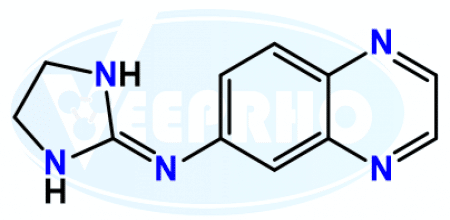
Brimonidine EP Impurity A
● Auf Lager
| Katalog-Nr.: | VL1910004 |
|---|---|
| CAS-Nr.: | 91147-43-2 |
| Summenformel: | C11H11N5 |
| Molare Masse: | 213.24 g/mol |
For laboratory use only: analytical, development and regulatory purposes. Supplied in mg quantities. Not for human or veterinary use.
Angebot für ein Set anfordern
- Angebot für dieses Set anfragen
Alle EP-Verunreinigungen von Brimonidine
9 ProdukteDie 9 Produkte ansehen
- Brimonidine EP Impurity A VL1910004
CAS 91147-43-2 - Brimonidine EP Impurity B VL1910003
CAS 50358-63-9 - Brimonidine EP Impurity C VL1910002
CAS 6298-37-9 - Brimonidine EP Impurity D VL1910005
CAS 842138-74-3 - Brimonidine EP Impurity E VL1910001
CAS 168329-48-4 - Brimonidine EP Impurity F VE007425
CAS 151110-15-5 - Brimonidine EP Impurity G VE006448
CAS 1216379-05-3 - Brimonidine EP Impurity G (HCl Salt) VE0012890
- Brimonidine EP Impurity H VE006452
CAS 91147-46-5
- Brimonidine EP Impurity A VL1910004
Zusätzliche Informationen zu CAS 91147-43-2
| Wirkstoff | Brimonidine |
|---|---|
| Produkttyp | Verunreinigungsstandards |
| IUPAC-Name | N-(Imidazolidin-2-ylidene)quinoxalin-6-amine |
| Name im EP | Brimonidine EP Impurity A |
| SMILES | c1cnc2cc(NC3=NCCN3)ccc2n1 |
| InChIKey | PVKUNRLEOHFACD-UHFFFAOYSA-N |
| CHNS-Verhältnis (%) (berechnet) | C 61.96 · H 5.20 · N 32.84 · S 0.00 |
| Beschreibung | Brimonidin EP-Impurity A, auch Desbromobrimonidin genannt, ist das debromierte Analogon des aus einem Imidazolin abgeleiteten adrenergen Agonisten Brimonidin. CAS 91147-43-2; Summenformel C11H11N5; Molekulargewicht 213,24 g/mol. Die Verunreinigung entsteht typischerweise durch Halogenverlust während der Synthese oder über hydrolytische und reduktive Abbauwege des arylbromierten Vorläufers. Aufgrund der engen strukturellen Nähe zum Wirkstoff ist die chromatographische Trennung anspruchsvoll, weshalb eine orthogonale Charakterisierung mittels LC-MS/MS, hochauflösender Massenspektrometrie und HPLC mit UV- oder Diodenarray-Detektion erforderlich sein kann; für die eindeutige Strukturzuordnung kann NMR notwendig sein. Als prozessbedingte verwandte Substanz ist ihre Kontrolle für das Verunreinigungsprofil und die Spezifikationsfestlegung gemäß pharmakopöischen und ICH-Anforderungen relevant. |
Angebot anfordern
"*" kennzeichnet Pflichtfelder