

- 100 % Datengenauigkeit
- Wissenschaftlicher Support rund um die Uhr
- 0 % Toleranz bei der Produktqualität
Lagerstandorte
- New Jersey, USA
- Tschechien, EU
* Bestand vorbehaltlich Verfügbarkeit.
Dokumentation
Enthält: HPLC, MASS/LC-MS, 1H-NMR, FT-IR, Gehalt, Structure Elucidation Report (SER) sowie zusätzliche analytische Daten je nach Produkt.
91147-46-5
Brimonidine EP Impurity H
● In Stock
| Katalog-Nr.: | VE006452 |
|---|---|
| CAS-Nr.: | 91147-46-5 |
| Summenformel: | C11H10ClN5 |
| Molare Masse: | 247.68 g/mol |
For laboratory use only: analytical, development and regulatory purposes. Supplied in mg quantities. Not for human or veterinary use.
Angebot für ein Set anfordern
- Angebot für dieses Set anfragen
Alle EP-Verunreinigungen von Brimonidine
9 ProdukteDie 9 Produkte ansehen
- Brimonidine EP Impurity A VL1910004
CAS 91147-43-2 - Brimonidine EP Impurity B VL1910003
CAS 50358-63-9 - Brimonidine EP Impurity C VL1910002
CAS 6298-37-9 - Brimonidine EP Impurity D VL1910005
CAS 842138-74-3 - Brimonidine EP Impurity E VL1910001
CAS 168329-48-4 - Brimonidine EP Impurity F VE007425
CAS 151110-15-5 - Brimonidine EP Impurity G VE006448
CAS 1216379-05-3 - Brimonidine EP Impurity G (HCl Salt) VE0012890
- Brimonidine EP Impurity H VE006452
CAS 91147-46-5
- Brimonidine EP Impurity A VL1910004
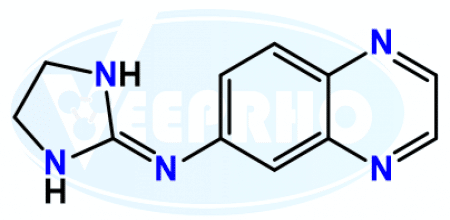
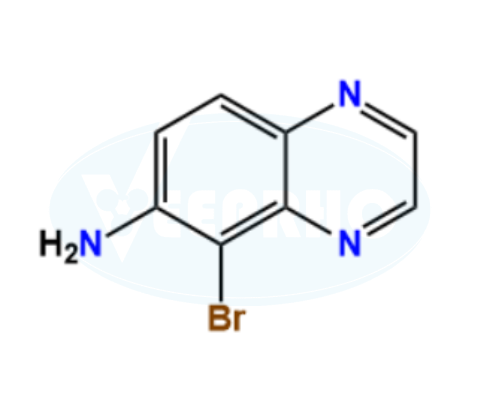
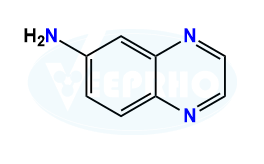
Zusätzliche Informationen zu CAS 91147-46-5
| Wirkstoff | Brimonidine |
|---|---|
| Produkttyp | Verunreinigungsstandards |
| IUPAC-Name | 5-Chloro-N-(4,5-dihydro-1H-imidazol-2-yl)-6-quinoxalinamine |
| Name im EP | Brimonidine EP Impurity H |
| SMILES | Clc1c(NC2=NCCN2)ccc2nccnc12 |
| InChIKey | VJQWCCBDYLTRPZ-UHFFFAOYSA-N |
| CHNS-Verhältnis (%) (berechnet) | C 53.34 · H 4.07 · N 28.28 · S 0.00 |
| Beschreibung | Brimonidin EP Verunreinigung H, CAS 91147-46-5, ist eine heteroaromatische, chlorierte und mit der Imidazolin-Struktur verknüpfte Verunreinigung aus der Brimonidin-Tartrat-Chemie. Mit der Summenformel C11H10ClN5 und einer Molekülmasse von 247,68 g/mol handelt es sich um eine strukturell definierte Spurenkomponente, die aus Abweichungen im Syntheseweg oder Nebenreaktionen bei der Assemblierung des aminoguanidin- und dichloroquinoxalinabgeleiteten Pharmakophors entstehen kann. Das polare, stark stickstoffhaltige Gerüst erfordert zur Identifizierung und Gehaltsbestimmung typischerweise LC-MS/MS, LC-HRMS sowie orthogonale HPLC-UV- oder Ion-Pair-LC-Verfahren. Regulatorisch wird eine solche verwandte Substanz als nichtflüchtige, potenziell bioaktive Prozessverunreinigung bewertet. |
Angebot anfordern
"*" kennzeichnet Pflichtfelder