

- 100 % Datengenauigkeit
- Wissenschaftlicher Support rund um die Uhr
- 0 % Toleranz bei der Produktqualität
Lagerstandorte
- New Jersey, USA
- Tschechien, EU
* Bestand vorbehaltlich Verfügbarkeit.
Dokumentation
Enthält: HPLC, MASS/LC-MS, 1H-NMR, FT-IR, Gehalt, Structure Elucidation Report (SER) sowie zusätzliche analytische Daten je nach Produkt.
21098-11-3
Buspirone EP Impurity L
● In Stock
| Katalog-Nr.: | VL249007 |
|---|---|
| CAS-Nr.: | 21098-11-3 |
| Summenformel: | C13H20ClNO2 |
| Molare Masse: | 257.76 g/mol |
For laboratory use only: analytical, development and regulatory purposes. Supplied in mg quantities. Not for human or veterinary use.
Packungen und Preise
| Packung | Preis | Menge |
|---|---|---|
| 100 mg | USD 199.00 |
Angezeigte Preise gelten für die Erteilung einer Bestellung.
Preise können sich je nach Verfügbarkeit der Verbindung und den Synthesekosten auf Grundlage der aktuellen Rohstoffkosten ändern. Veeprho behält sich das Recht vor, Preise ohne Vorankündigung zu ändern.
Andere Packungsgröße oder Menge? Individuelles Angebot anfordernWie können wir helfen?
Angebot für ein Set anfordern
- Angebot für dieses Set anfragen
Alle EP-Verunreinigungen von Buspirone
20 ProdukteDie 20 Produkte ansehen
- Buspirone Chlorobuspirone VL249014
CAS 2725354-99-2 - Buspirone EP Impurity A VL249004
CAS 20980-22-7 - Buspirone EP Impurity A (Dihydrochloride Salt) VE0020605
CAS 94021-22-4 - Buspirone EP Impurity B VE0013149
CAS 81461-72-5 - Buspirone EP Impurity B (Free Base) VE0020603
CAS 179071-85-3 - Buspirone EP Impurity C VL249009
CAS 257877-45-5 - Buspirone EP Impurity D VL249010
- Buspirone EP Impurity D (4HCl Salt) VE0013150
- Buspirone EP Impurity D (Free Base) VE0020602
CAS 2724726-67-2 - Buspirone EP Impurity E VL249001
CAS 257877-43-3 - Buspirone EP Impurity F VL249012
CAS 2512210-24-9 - Buspirone EP Impurity G VL249005
CAS 84746-24-7 - Buspirone EP Impurity H VL249013
CAS 2708578-34-9 - Buspirone EP Impurity J VL249003
CAS 2726492-72-2 - Buspirone EP Impurity J (Oxalate Salt) VE0020604
CAS 2726492-73-3 - Buspirone EP Impurity K VL249002
CAS 1075-89-4 - Buspirone EP Impurity L VL249007
CAS 21098-11-3 - Buspirone EP Impurity M VL249016
CAS 80827-62-9 - Buspirone EP Impurity N VL249006
CAS 257877-44-4 - Buspirone Spiroammonium Salt VL249008
CAS 81461-73-6
- Buspirone Chlorobuspirone VL249014
- Angebot für dieses Set anfragen
Alle USP-Verunreinigungen von Buspirone
14 ProdukteDie 14 Produkte ansehen
- Buspirone EP Impurity A VL249004
CAS 20980-22-7 - Buspirone EP Impurity A (Dihydrochloride Salt) VE0020605
CAS 94021-22-4 - Buspirone EP Impurity C VL249009
CAS 257877-45-5 - Buspirone EP Impurity D VL249010
- Buspirone EP Impurity D (Free Base) VE0020602
CAS 2724726-67-2 - Buspirone EP Impurity E VL249001
CAS 257877-43-3 - Buspirone EP Impurity F VL249012
CAS 2512210-24-9 - Buspirone EP Impurity G VL249005
CAS 84746-24-7 - Buspirone EP Impurity H VL249013
CAS 2708578-34-9 - Buspirone EP Impurity J VL249003
CAS 2726492-72-2 - Buspirone EP Impurity K VL249002
CAS 1075-89-4 - Buspirone EP Impurity L VL249007
CAS 21098-11-3 - Buspirone EP Impurity M VL249016
CAS 80827-62-9 - Buspirone EP Impurity N VL249006
CAS 257877-44-4
- Buspirone EP Impurity A VL249004


Zusätzliche Informationen zu CAS 21098-11-3
| Wirkstoff | Buspirone |
|---|---|
| Produkttyp | Verunreinigungsstandards |
| IUPAC-Name | 8-(4-Chlorobutyl)-8-azaspiro[4.5]decane-7,9-dione |
| Name im EP | Buspirone EP Impurity L |
| Name in der USP | Buspirone Related Compound L |
| SMILES | O=C1CC2(CCCC2)CC(=O)N1CCCCCl |
| InChIKey | BCNBRBQCDHLCBD-UHFFFAOYSA-N |
| CHNS-Verhältnis (%) (berechnet) | C 60.58 · H 7.82 · N 5.43 · S 0.00 |
| Versandbedingung | Ambient Temperature |
| Beschreibung | Buspiron Verwandte Verbindung L, auch als Buspiron EP-Impurität L bezeichnet, ist eine chlorierte, aus Buspiron abgeleitete Prozessverunreinigung mit der CAS-Nummer 21098-11-3. Mit der Summenformel C13H20ClNO2 und einer Molmasse von 257,76 g/mol handelt es sich um ein strukturell definiertes, heteroatomhaltiges Analogon, das für das Verunreinigungsprofil von Buspironhydrochlorid-Materialien relevant ist. Die Entstehung wird typischerweise auf Nebenprodukte des Synthesewegs oder halogenhaltige Zwischenstufen zurückgeführt und weniger auf einfache oxidative Degradation. Für die Charakterisierung und Quantifizierung werden meist LC-MS/MS zur Selektivität sowie ergänzend HPLC-UV oder GC-MS nach Bedarf eingesetzt. Als definierte organische Verunreinigung fällt sie in pharmakopöische und ICH-basierte Kontrollkonzepte. |
Angebot anfordern
"*" kennzeichnet Pflichtfelder
Weitere Produkte zu Buspirone Verunreinigungen
| Struktur der Verunreinigung | Name der Verunreinigung | Katalog-Nr. |
|---|---|---|
| Buspirone EP Impurity A | VL249004 | |
| Buspirone EP Impurity A (Dihydrochloride Salt) | VE0020605 | |
 | Buspirone EP Impurity B | VE0013149 |
 | Buspirone EP Impurity B (Free Base) | VE0020603 |
| Buspirone EP Impurity C | VL249009 | |
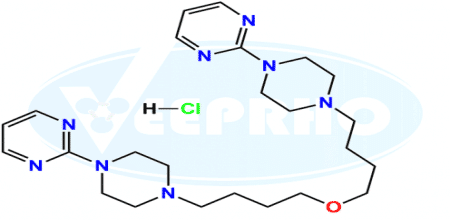 | Buspirone EP Impurity D | VL249010 |
 | Buspirone EP Impurity D (4HCl Salt) | VE0013150 |
| Buspirone EP Impurity D (Free Base) | VE0020602 | |
| Buspirone EP Impurity E | VL249001 | |
| Buspirone EP Impurity E (HCl salt) | VE0022308 | |
| Buspirone EP Impurity F | VL249012 | |
| Buspirone EP Impurity G | VL249005 |