
- 100% accuracy of data
- 24/7 scientific support
- 0% tolerance in quality of product
Stock Locations
- New Jersey, USA
- Czech Republic, EU
* Stock subject to availability.
Documentation
The batch COA includes HPLC, MASS/LC-MS, 1H NMR, FT-IR, Potency, and Structure Elucidation Report (SER)..
1839-18-5
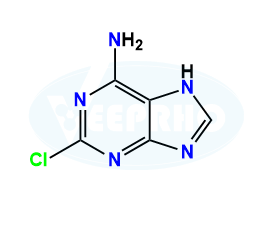
Cladribine EP Impurity C
● In Stock
| Catalogue No.: | VE0013729 |
|---|---|
| CAS No.: | 1839-18-5 |
| Mol. Formula: | C5H4ClN5 |
| Mol. Weight: | 169.57 g/mol |
For laboratory use only: analytical, development and regulatory purposes. Supplied in mg quantities. Not for human or veterinary use.
Request a quote for a set
- Request quote for this set
All EP impurities of Cladribine
7 productsSee the 7 products
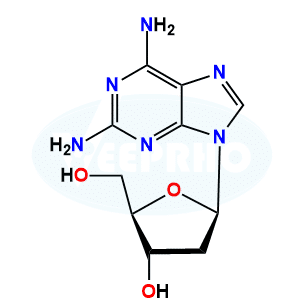
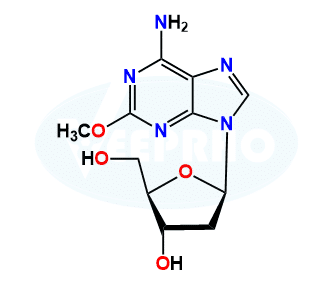
- Cladribine EP Impurity A VE0013733
CAS 4546-70-7 - Cladribine EP Impurity B VE0013734
CAS 24757-70-8 - Cladribine EP Impurity C VE0013729
CAS 1839-18-5 - Cladribine EP Impurity D VE0013730
CAS 5542-92-7 - Cladribine EP Impurity E (Free Base) VE0027623
CAS 1831121-84-6 - Cladribine EP Impurity F VE0013731
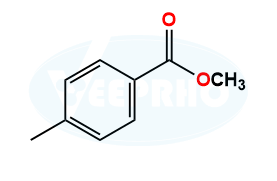
CAS 619-55-6 - Cladribine EP Impurity G VE0013732
CAS 99-75-2
- Cladribine EP Impurity A VE0013733
- Request quote for this set
All USP impurities of Cladribine
3 productsSee the 3 products
- Cladribine EP Impurity A VE0013733
CAS 4546-70-7 - Cladribine EP Impurity C VE0013729
CAS 1839-18-5 - Cladribine EP Impurity G VE0013732
CAS 99-75-2
- Cladribine EP Impurity A VE0013733
Additional information on CAS 1839-18-5
| Parent drug | Cladribine |
|---|---|
| Product type | Impurity standards |
| IUPAC name | 2-chloro-7H-purin-6-amine |
| EP name | Cladribine EP Impurity C |
| USP name | 2-chloroadenine |
| Other Synonyms | p-Toluamide; p-Methylbenzamide; Benzamide, 4-methyl- |
| SMILES | Nc1nc(Cl)nc2nc[nH]c12 |
| InChI | InChI=1S/C8H9NO/c1-6-2-4-7(5-3-6)8(9)10/h2-5H,1H3,(H2,9,10) |
| InChIKey | HBJGQJWNMZDFKL-UHFFFAOYSA-N |
| CHNS Ratio (%) (calculated) | C 35.42 · H 2.38 · N 41.30 · S 0.00 |
| Shipping condition | Ambient Temperature |
| References | - |
| Additional characterisation data | QNMR, D2O Exchange, 13C NMR, 13C APT, COSY NMR, NOESY NMR, 15N NMR, HSQC NMR, HMQC NMR, and HMBC NMR. These are available upon request and may be free or subject to additional charges. |
| Description | Cladribine EP Impurity C, identified as 2-chloroadenine (CAS 1839-18-5), is a halogenated purine base with molecular formula C5H4ClN5 and molecular weight 169.57 g/mol. It represents a structurally relevant process-related impurity and potential degradation product arising from chlorination or dehalogenation chemistry associated with cladribine synthesis or stability. Because the electron-deficient 2-chloro substituent alters tautomeric and ionization behavior, trace-level determination commonly requires LC-MS/MS, LC-HRMS, and orthogonal RP-HPLC with UV or PDA detection. In a regulatory context, its impurity profile is evaluated under impurity control and mutagenic impurity assessment principles, with attention to aromatic heterocycle reactivity and related genotoxic risk. |
Request a Quote
"*" indicates required fields