
- 100% accuracy of data
- 24/7 scientific support
- 0% tolerance in quality of product
Mutagenicity assessment (ICH M7)
Treated as a potentially non-mutagenic impurity (ICH M7 Class 4–5).
Computational (in silico) assessmentStock Locations
- New Jersey, USA
- Czech Republic, EUIn stock
* Stock subject to availability.
Documentation
Includes: HPLC, MASS/LC-MS, 1H NMR, FT-IR, Potency, Structure Elucidation Report (SER), and additional analytical data depending on the product.
3079028-35-3
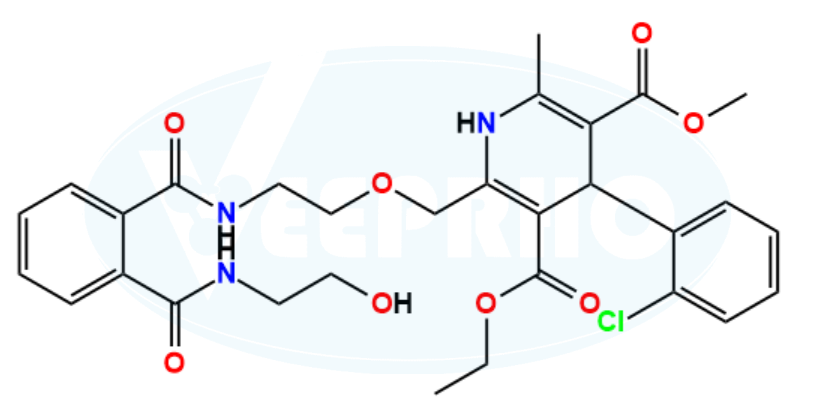
Hydroxyethyl Phthalyl Amlodipine
● In Stock
| Catalogue No.: | VE0011837 |
|---|---|
| CAS No.: | 3079028-35-3 |
| Mol. Formula: | C30H34ClN3O8 |
| Mol. Weight: | 600.06 g/mol |
For laboratory use only: analytical, development and regulatory purposes. Supplied in mg quantities. Not for human or veterinary use.
Request a quote for a set
- Request quote for this set
All USP impurities of Amlodipine
17 productsSee the 17 products
- Amlodipine EP Impurity A VL19004
CAS 88150-62-3 - Amlodipine EP Impurity B VL19002
CAS 721958-72-1 - Amlodipine EP Impurity D (Besylate Salt) VL19001
CAS 2733700-89-3 - Amlodipine EP Impurity D (Free Base) VL19023
CAS 113994-41-5 - Amlodipine EP Impurity D (Fumarate salt) VL19024
CAS 2138811-33-1 - Amlodipine EP Impurity D (HCl Salt) VE0012177
CAS 2414962-06-2 - Amlodipine EP Impurity D (Mesylate salt) VE006056
- Amlodipine EP Impurity D (Oxalate Salt) VL19015
CAS 1216406-90-4 (oxalate) - Amlodipine EP Impurity E VL19005
CAS 140171-65-9 - Amlodipine EP Impurity E (Maleate Salt) VE006591
CAS 400024-12-6 - Amlodipine EP Impurity E (Oxalate Salt) VE006552
- Amlodipine EP Impurity F VL19026
CAS 140171-66-0 - Amlodipine EP Impurity F (Maleate Salt) VE0012174
CAS 400024-11-5 - Amlodipine EP Impurity G VL19003
CAS 43067-01-2 - Amlodipine EP Impurity H VL19007
CAS 318465-73-5 - Amlodipine Related Compound K VL19048
CAS 1621516-91-3 - Hydroxyethyl Phthalyl Amlodipine VE0011837
CAS 3079028-35-3
- Amlodipine EP Impurity A VL19004


Additional information on CAS 3079028-35-3
| Parent drug | Amlodipine |
|---|---|
| Product type | Impurity standards |
| IUPAC name | 3-ethyl 5-methyl 4-(2-chlorophenyl)-2-((2-(2-((2-hydroxyethyl)carbamoyl)benzamido)ethoxy)methyl)-6-methyl-1,4-dihydropyridine-3,5-dicarboxylate |
| USP name | Hydroxyethyl Phthalyl Amlodipine |
| SMILES | CCOC(=O)C1=C(COCCNC(=O)c2ccccc2C(=O)NCCO)NC(C)=C(C(=O)OC)C1c1ccccc1Cl |
| InChIKey | UEXLCWZYJIKTDG-UHFFFAOYSA-N |
| CHNS Ratio (%) (calculated) | C 60.05 · H 5.71 · N 7.00 · S 0.00 |
| References | - |
| Description | Hydroxyethyl Phthalyl Amlodipine, CAS 3079028-35-3, is a structurally defined amlodipine-related impurity derived from esterified phthalyl and hydroxyethyl substitution on the dihydropyridine scaffold. With molecular formula C30H34ClN3O8 and molecular weight 600.06 g/mol, it represents a polar, high-mass process-related species that may arise during synthesis, protection-deprotection steps, or hydrolytic transformation of amlodipine intermediates. Its compositional complexity generally necessitates LC-MS/MS for selective characterization and LC-UV or high-resolution LC-MS for trace quantification. In a regulatory setting, such impurities are assessed under impurity profiling principles because related dihydropyridine derivatives can affect product consistency and degradation behavior. |
Request a Quote
"*" indicates required fields
Other products related to Amlodipine impurities
| Impurity structure | Name of Impurity | Catalogue No. |
|---|---|---|
| Amlodipine EP Impurity A | VL19004 | |
| Amlodipine EP Impurity B | VL19002 | |
| Amlodipine EP Impurity C | VL19030 | |
| Amlodipine EP Impurity D (Besylate Salt) | VL19001 | |
| Amlodipine EP Impurity D (Free Base) | VL19023 | |
| Amlodipine EP Impurity D (Fumarate salt) | VL19024 | |
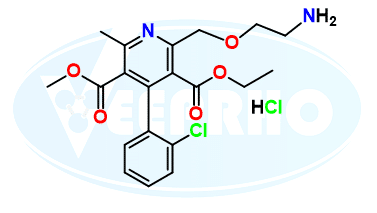 | Amlodipine EP Impurity D (HCl Salt) | VE0012177 |
| Amlodipine EP Impurity D (Mesylate salt) | VE006056 | |
| Amlodipine EP Impurity D (Oxalate Salt) | VL19015 | |
| Amlodipine EP Impurity E | VL19005 | |
 | Amlodipine EP Impurity E (Oxalate Salt) | VE006552 |
| Amlodipine EP Impurity F | VL19026 |
Show all related products N-Nitroso Amlodipine impurities (13)