
- 100% accuracy of data
- 24/7 scientific support
- 0% tolerance in quality of product
Stock Locations
- New Jersey, USA
- Czech Republic, EUIn stock
* Stock subject to availability.
Documentation
Includes: HPLC, MASS/LC-MS, 1H NMR, FT-IR, Potency, Structure Elucidation Report (SER), and additional analytical data depending on the product.
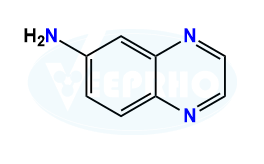
6298-37-9
Brimonidine EP Impurity C
● In Stock
| Catalogue No.: | VL1910002 |
|---|---|
| CAS No.: | 6298-37-9 |
| Mol. Formula: | C8H7N3 |
| Mol. Weight: | 145.16 g/mol |
For laboratory use only: analytical, development and regulatory purposes. Supplied in mg quantities. Not for human or veterinary use.
Request a quote for a set
- Request quote for this set
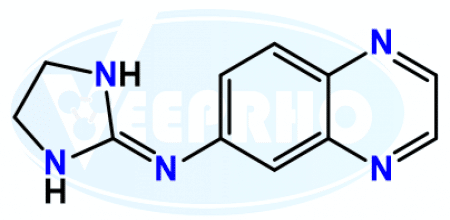
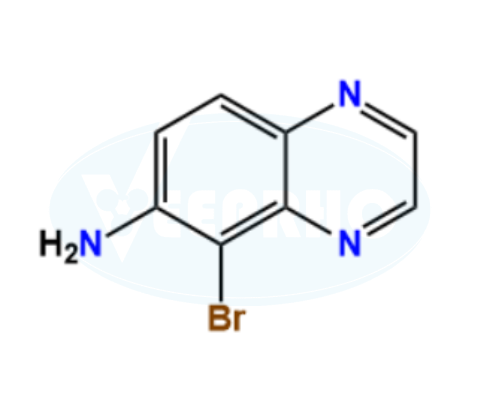
All EP impurities of Brimonidine
9 productsSee the 9 products
- Brimonidine EP Impurity A VL1910004
CAS 91147-43-2 - Brimonidine EP Impurity B VL1910003
CAS 50358-63-9 - Brimonidine EP Impurity C VL1910002
CAS 6298-37-9 - Brimonidine EP Impurity D VL1910005
CAS 842138-74-3 - Brimonidine EP Impurity E VL1910001
CAS 168329-48-4 - Brimonidine EP Impurity F VE007425
CAS 151110-15-5 - Brimonidine EP Impurity G VE006448
CAS 1216379-05-3 - Brimonidine EP Impurity G (HCl Salt) VE0012890
- Brimonidine EP Impurity H VE006452
CAS 91147-46-5
- Brimonidine EP Impurity A VL1910004
Additional information on CAS 6298-37-9
| Parent drug | Brimonidine |
|---|---|
| Product type | Impurity standards |
| IUPAC name | Quinoxalin-6-amine |
| EP name | Brimonidine EP Impurity C |
| SMILES | Nc1ccc2nccnc2c1 |
| InChIKey | MSGRFBKVMUKEGZ-UHFFFAOYSA-N |
| CHNS Ratio (%) (calculated) | C 66.19 · H 4.86 · N 28.95 · S 0.00 |
| Description | Brimonidine EP Impurity C, identified as 6-aminoquinoxaline, is a heteroaromatic aminoquinoxaline derivative with CAS 6298-37-9, molecular formula C8H7N3, and molecular weight 145.16 g/mol. The structure consists of a fused benzopyrazine ring bearing a primary amino substituent, consistent with a synthetic intermediate or process-related impurity arising from quinoxaline route chemistry or incomplete cyclization and amination. As a low-level related substance, it is evaluated within pharmacopeial impurity control frameworks and, depending on origin and exposure context, may warrant genotoxic impurity assessment under ICH M7. Detection typically requires LC-MS/MS, HPLC with diode-array detection, and, for confirmation, high-resolution MS or LC-UV methods. |
Request a Quote
"*" indicates required fields