

- 100% accuracy of data
- 24/7 scientific support
- 0% tolerance in quality of product
Stock Locations
- New Jersey, USA
- Czech Republic, EU
* Stock subject to availability.
Documentation
Includes: HPLC, MASS/LC-MS, 1H NMR, FT-IR, Potency, Structure Elucidation Report (SER), and additional analytical data depending on the product.
91147-46-5
Brimonidine EP Impurity H
● In Stock
| Catalogue No.: | VE006452 |
|---|---|
| CAS No.: | 91147-46-5 |
| Mol. Formula: | C11H10ClN5 |
| Mol. Weight: | 247.68 g/mol |
For laboratory use only: analytical, development and regulatory purposes. Supplied in mg quantities. Not for human or veterinary use.
Request a quote for a set
- Request quote for this set
All EP impurities of Brimonidine
9 productsSee the 9 products
- Brimonidine EP Impurity A VL1910004
CAS 91147-43-2 - Brimonidine EP Impurity B VL1910003
CAS 50358-63-9 - Brimonidine EP Impurity C VL1910002
CAS 6298-37-9 - Brimonidine EP Impurity D VL1910005
CAS 842138-74-3 - Brimonidine EP Impurity E VL1910001
CAS 168329-48-4 - Brimonidine EP Impurity F VE007425
CAS 151110-15-5 - Brimonidine EP Impurity G VE006448
CAS 1216379-05-3 - Brimonidine EP Impurity G (HCl Salt) VE0012890
- Brimonidine EP Impurity H VE006452
CAS 91147-46-5
- Brimonidine EP Impurity A VL1910004
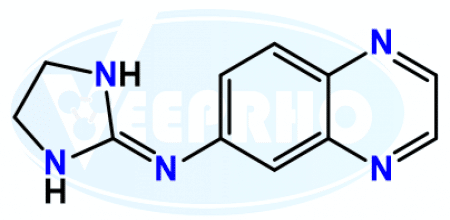
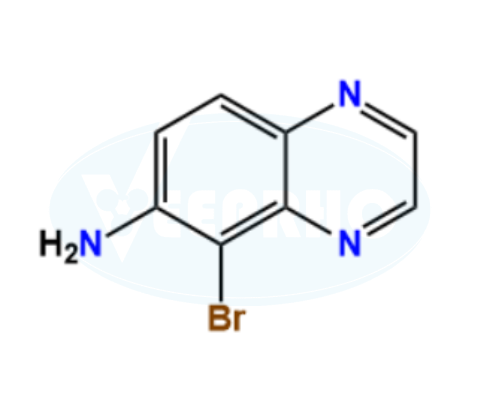
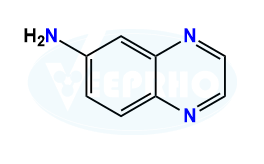
Additional information on CAS 91147-46-5
| Parent drug | Brimonidine |
|---|---|
| Product type | Impurity standards |
| IUPAC name | 5-Chloro-N-(4,5-dihydro-1H-imidazol-2-yl)-6-quinoxalinamine |
| EP name | Brimonidine EP Impurity H |
| SMILES | Clc1c(NC2=NCCN2)ccc2nccnc12 |
| InChIKey | VJQWCCBDYLTRPZ-UHFFFAOYSA-N |
| CHNS Ratio (%) (calculated) | C 53.34 · H 4.07 · N 28.28 · S 0.00 |
| Description | Brimonidine EP Impurity H, CAS 91147-46-5, is a heteroaromatic chlorinated imidazoline-related impurity associated with brimonidine tartrate chemistry. With molecular formula C11H10ClN5 and molecular weight 247.68 g/mol, it represents a structurally defined trace component arising from synthetic route deviations or side reactions during assembly of the aminoguanidine and dichloroquinoxaline-derived pharmacophore. Its polar, basic nitrogen-rich framework typically necessitates LC-MS/MS, LC-HRMS, and orthogonal HPLC-UV or ion-pair LC methods for assignment and quantification. In a regulatory context, such related substances are evaluated under impurity control expectations for non-volatile, potentially bioactive process impurities. |
Request a Quote
"*" indicates required fields