

- 100% accuracy of data
- 24/7 scientific support
- 0% tolerance in quality of product
Mutagenicity assessment (ICH M7)
Potentially mutagenic impurity (ICH M7 Class 1–3).
N-nitroso compound: ICH M7 cohort of concern.FDA1500 ng/dayTable 1 updated 9/24/2026
Stock Locations
- New Jersey, USA
- Czech Republic, EU
* Stock subject to availability.
Documentation
Includes: HPLC, MASS/LC-MS, 1H NMR, FT-IR, Potency, Structure Elucidation Report (SER), and additional analytical data depending on the product.
3048033-49-1
N-Nitroso Amlodipine
● Report Available Immediately
| Catalogue No.: | VE007675 |
|---|---|
| CAS No.: | 3048033-49-1 |
| Mol. Formula: | C20H24ClN3O6 |
| Mol. Weight: | 437.87 g/mol |
For laboratory use only: analytical, development and regulatory purposes. Supplied in mg quantities. Not for human or veterinary use.
Request a quote for a set
- Request quote for this set
All nitrosamine impurities of Amlodipine
17 productsSee the 17 products
- Amlodipine Nitroso N-Lactoside VE0024990
- N-Nitroso Amlodipine VE007675
CAS 3048033-49-1 - N-Nitroso Amlodipine; Synthesis Attempts and Failure Report (NAP Test) VE0023196
CAS 3048033-49-1 - N-Nitroso Amlodipine Atorvastatine Adduct VE0010279
- N-Nitroso Amlodipine EP Impurity A VE0010280
- N-Nitroso Amlodipine EP Impurity B VE0010278
- N-Nitroso Amlodipine EP Impurity E VE0010289
- N-Nitroso Amlodipine EP Impurity F VE0010288
- N-Nitroso Amlodipine EP Impurity G VE0010284
- N-Nitroso Amlodipine EP Impurity H VE0010286
- N-Nitroso Amlodipine EP Impurity K VE0011081
- N-Nitroso Amlodipine Galactose Adduct Impurity VE0010287
- N-Nitroso Amlodipine Impurity-1 VE008552
- N-Nitroso Amlodipine Impurity-1; Synthesis Attempts and Failure Report (NAP Test) VE0026430
- N-Nitroso Amlodipine Lactose Adduct Impurity VE0010285
- Nitroso Amlodipine Impurity B VE007650
- Nitroso Phthaloyl Amlodipine VE007651
- Request quote for this set
This impurity and its failure report
2 productsSee the 2 products
- N-Nitroso Amlodipine VE007675
CAS 3048033-49-1 - N-Nitroso Amlodipine; Synthesis Attempts and Failure Report (NAP Test) VE0023196
CAS 3048033-49-1
- N-Nitroso Amlodipine VE007675


Additional information on CAS 3048033-49-1
| Parent drug | Amlodipine |
|---|---|
| Product type | Impurity standards, Nitroso impurities |
| IUPAC name | 3-Ethyl 5-methyl 2-((2-aminoethoxy)methyl)-4-(2-chlorophenyl)-6-methyl-1-nitroso-1,4-dihydropyridine-3,5-dicarboxylate |
| SMILES | CCOC(=O)C1=C(COCCN)N(N=O)C(C)=C(C(=O)OC)C1c1ccccc1Cl |
| InChIKey | PMGMIECMGGGHHP-UHFFFAOYSA-N |
| CHNS Ratio (%) (calculated) | C 54.86 · H 5.52 · N 9.60 · S 0.00 |
| References | Fares | Hassan | et al. ?Amlodipine in Hypertension: A First-Line Agent with Efficacy for Improving Blood Pressure and Patient Outcomes.? Open Heart | vol. 3 | no. 2 | Sept. 2016 | p. e000473 | https://doi.org/10.1136/openhrt-2016-000473. |
| Description | Nitroso Amlodipine Impurity, also designated N-Nitroso Amlodipine (CAS 3048033-49-1), is a nitrosamine-related process impurity associated with amlodipine chemistry. With molecular formula C20H24ClN3O6 and molecular weight 437.87 g/mol, it contains the characteristic N-nitroso functionality that places it within the structural domain of compounds of regulatory concern because of potential genotoxicity. Formation may arise from nitrosating conditions during synthesis, exposure of amine-containing intermediates to nitrite, or oxidative degradation pathways. Sensitive characterization and quantification generally require LC-MS/MS, with confirmatory LC-HRMS or GC-MS methods, under impurity control expectations aligned with ICH M7 principles. |
Request a Quote
"*" indicates required fields
Other products related to Amlodipine and Nitroso impurities
| Impurity structure | Name of Impurity | Catalogue No. |
|---|---|---|
| Amlodipine EP Impurity A | VL19004 | |
| Amlodipine EP Impurity B | VL19002 | |
| Amlodipine EP Impurity C | VL19030 | |
| Amlodipine EP Impurity D (Besylate Salt) | VL19001 | |
| Amlodipine EP Impurity D (Free Base) | VL19023 | |
| Amlodipine EP Impurity D (Fumarate salt) | VL19024 | |
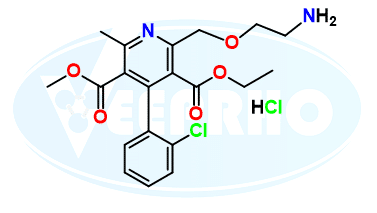 | Amlodipine EP Impurity D (HCl Salt) | VE0012177 |
| Amlodipine EP Impurity D (Mesylate salt) | VE006056 | |
| Amlodipine EP Impurity D (Oxalate Salt) | VL19015 | |
| Amlodipine EP Impurity E | VL19005 | |
 | Amlodipine EP Impurity E (Oxalate Salt) | VE006552 |
| Amlodipine EP Impurity F | VL19026 |
Show all related products N-Nitroso Amlodipine impurities (13)