

- 100 % Datengenauigkeit
- Wissenschaftlicher Support rund um die Uhr
- 0 % Toleranz bei der Produktqualität
Lagerstandorte
- New Jersey, USA
- Tschechien, EU
* Bestand vorbehaltlich Verfügbarkeit.
Dokumentation
Enthält: HPLC, MASS/LC-MS, 1H-NMR, FT-IR, Gehalt, Structure Elucidation Report (SER) sowie zusätzliche analytische Daten je nach Produkt.
611-59-6
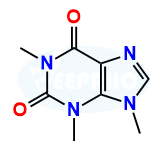
Caffeine EP Impurity F
● In Stock
| Katalog-Nr.: | VE0013130 |
|---|---|
| CAS-Nr.: | 611-59-6 |
| Summenformel: | C7H8N4O2 |
| Molare Masse: | 180.17 g/mol |
For laboratory use only: analytical, development and regulatory purposes. Supplied in mg quantities. Not for human or veterinary use.
Angebot für ein Set anfordern
- Angebot für dieses Set anfragen
Alle EP-Verunreinigungen von Caffeine
7 ProdukteDie 7 Produkte ansehen
- Caffeine EP Impurity C VE0013128
CAS 519-32-4 - Caffeine EP Impurity D VL3710004
CAS 83-67-0 - Caffeine EP Impurity E VE0015582
CAS 20041-90-1 - Caffeine EP Impurity E (HCl Salt) VE0013129
CAS 107605-95-8 - Caffeine EP Impurity E (Nitrate Salt) VE0022949
CAS 209725-34-8 - Caffeine EP Impurity F VE0013130
CAS 611-59-6 - Theophylline EP Impurity C VE008571
CAS 7597-60-6
- Caffeine EP Impurity C VE0013128


Zusätzliche Informationen zu CAS 611-59-6
| Wirkstoff | Caffeine |
|---|---|
| Produkttyp | Verunreinigungsstandards |
| IUPAC-Name | 3,7-Dihydro-1,7-dimethyl-1H-purine-2,6-dione |
| Name im EP | Caffeine EP Impurity F |
| SMILES | Cn1c(=O)[nH]c2ncn(C)c2c1=O |
| InChIKey | QUNWUDVFRNGTCO-UHFFFAOYSA-N |
| CHNS-Verhältnis (%) (berechnet) | C 46.67 · H 4.48 · N 31.10 · S 0.00 |
| Referenzen | - |
| Beschreibung | Caffeine EP Impurity F, identifiziert als Paraxanthin, ist ein 1,7-Dimethylxanthin und ein strukturell definierter Methylxanthin-Verunreinigungsstoff mit Bezug zum Koffein-Stoffwechsel. Die CAS-Nummer 611-59-6 gehört zu einer Verbindung mit der Summenformel C7H8N4O2 und einer Molmasse von 180.17 g/mol. In pharmakopöischer und stabilitätsbezogener Hinsicht kann ihr Auftreten auf enzymatische Demethylierung, oxidative Umwandlung oder prozessbedingte Einträge aus der Koffeinherstellung hinweisen. Die Identifizierung erfordert aufgrund der engen Isomerie meist RP-LC-MS/MS, HPLC-UV sowie bestätigend HRMS oder NMR. Die regulatorische Beurteilung berücksichtigt Identität, relative Response und das Gesamtverunreinigungsprofil koffeinhaltiger Substanzen. |
Angebot anfordern
"*" kennzeichnet Pflichtfelder
Weitere Produkte zu Caffeine Verunreinigungen
| Struktur der Verunreinigung | Name der Verunreinigung | Katalog-Nr. |
|---|---|---|
| Caffeine EP Impurity C | VE0013128 | |
| Caffeine EP Impurity D | VL3710004 | |
| Caffeine EP Impurity E | VE0015582 | |
 | Caffeine EP Impurity E (HCl Salt) | VE0013129 |
| Caffeine EP Impurity E (Nitrate Salt) | VE0022949 | |
| Theophylline EP Impurity C | VE008571 | |
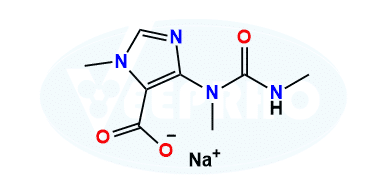 | Caffeine Impurity 1 (Na Salt) | VE0013158 |