

- 100 % Datengenauigkeit
- Wissenschaftlicher Support rund um die Uhr
- 0 % Toleranz bei der Produktqualität
Lagerstandorte
- New Jersey, USA
- Tschechien, EU
* Bestand vorbehaltlich Verfügbarkeit.
Dokumentation
Enthält: HPLC, MASS/LC-MS, 1H-NMR, FT-IR, Gehalt, Structure Elucidation Report (SER) sowie zusätzliche analytische Daten je nach Produkt.
209725-34-8
Caffeine EP Impurity E (Nitrate Salt)
● In Stock
| Katalog-Nr.: | VE0022949 |
|---|---|
| CAS-Nr.: | 209725-34-8 |
| Summenformel: | C7H13N5O4 |
| Molare Masse: | 231.21 g/mol |
For laboratory use only: analytical, development and regulatory purposes. Supplied in mg quantities. Not for human or veterinary use.
Angebot für ein Set anfordern
- Angebot für dieses Set anfragen
Alle EP-Verunreinigungen von Caffeine
7 ProdukteDie 7 Produkte ansehen
- Caffeine EP Impurity C VE0013128
CAS 519-32-4 - Caffeine EP Impurity D VL3710004
CAS 83-67-0 - Caffeine EP Impurity E VE0015582
CAS 20041-90-1 - Caffeine EP Impurity E (HCl Salt) VE0013129
CAS 107605-95-8 - Caffeine EP Impurity E (Nitrate Salt) VE0022949
CAS 209725-34-8 - Caffeine EP Impurity F VE0013130
CAS 611-59-6 - Theophylline EP Impurity C VE008571
CAS 7597-60-6
- Caffeine EP Impurity C VE0013128
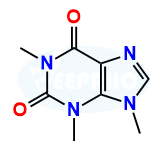


Zusätzliche Informationen zu CAS 209725-34-8
| Wirkstoff | Caffeine |
|---|---|
| Produkttyp | Verunreinigungsstandards |
| IUPAC-Name | N,1-dimethyl-4-(methylamino)-1H-imidazole-5-carboxamide nitrate |
| Name im EP | Caffeine EP Impurity E(Nitrate Salt) |
| SMILES | CNC(=O)c1c(NC)ncn1C.O=[N+]([O-])O |
| InChIKey | XGFNYBSCQHXIQC-UHFFFAOYSA-N |
| CHNS-Verhältnis (%) (berechnet) | C 36.36 · H 5.67 · N 30.29 · S 0.00 |
| Beschreibung | Caffeine EP Impurity E, auch als Caffeidine-Impurity in Form des Nitrats bezeichnet, trägt die CAS-Nummer 209725-34-8 und besitzt die Summenformel C7H13N5O4 bei einer Molmasse von 231,21 g/mol. Das Molekül ist ein koffeinbezogenes Xanthin-Derivat und keine Nitrosaminverbindung. Es entsteht typischerweise durch oxidative oder hydrolytische Umwandlung während Synthese, Aufarbeitung oder Lagerung von Methylxanthinen. Aufgrund der polaren, ionischen Nitratform sind für die Bestimmung meist RP-LC mit MS/MS oder HRMS sowie ergänzend Ionenchromatographie oder NMR erforderlich. Pharmakopöial dient es der Verunreinigungscharakterisierung und Spezifikationskontrolle. |
Angebot anfordern
"*" kennzeichnet Pflichtfelder
Weitere Produkte zu Caffeine Verunreinigungen
| Struktur der Verunreinigung | Name der Verunreinigung | Katalog-Nr. |
|---|---|---|
| Caffeine EP Impurity C | VE0013128 | |
| Caffeine EP Impurity D | VL3710004 | |
| Caffeine EP Impurity E | VE0015582 | |
 | Caffeine EP Impurity E (HCl Salt) | VE0013129 |
| Caffeine EP Impurity F | VE0013130 | |
| Theophylline EP Impurity C | VE008571 | |
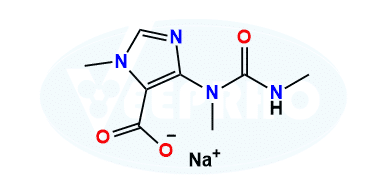 | Caffeine Impurity 1 (Na Salt) | VE0013158 |