
- 100 % Datengenauigkeit
- Wissenschaftlicher Support rund um die Uhr
- 0 % Toleranz bei der Produktqualität
Lagerstandorte
- New Jersey, USA
- Tschechien, EU
* Bestand vorbehaltlich Verfügbarkeit.
Dokumentation
Enthält: HPLC, MASS/LC-MS, 1H-NMR, FT-IR, Gehalt, Structure Elucidation Report (SER) sowie zusätzliche analytische Daten je nach Produkt.
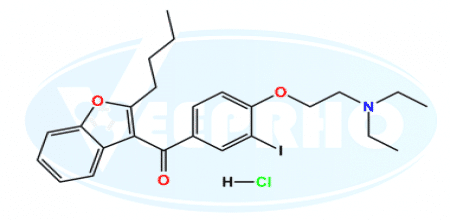
1397201-93-2
Amiodarone EP Impurity C (HCl salt)
● In Stock
| Katalog-Nr.: | VL1390003 |
|---|---|
| CAS-Nr.: | 1397201-93-2 |
| Summenformel: | C25H31ClINO3 |
| Molare Masse: | 555.1037 |
For laboratory use only: analytical, development and regulatory purposes. Supplied in mg quantities. Not for human or veterinary use.
Angebot für ein Set anfordern
- Angebot für dieses Set anfragen
Alle EP-Verunreinigungen von Amiodarone
14 ProdukteDie 14 Produkte ansehen
- Amiodarone EP Impurity A VL1390001
CAS 23551-25-9 - Amiodarone EP Impurity A (HCl salt) VE006504
CAS 95820-13-6 - Amiodarone EP Impurity A (Oxalate) VE0022948
CAS 2984442-50-2 - Amiodarone EP Impurity B VL1390002
CAS 96027-74-6 - Amiodarone EP Impurity B (Free Base) VE0020389
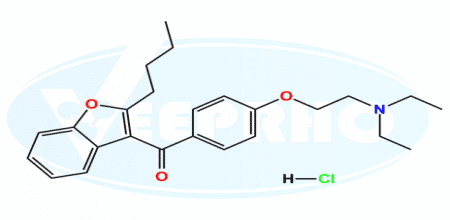
CAS 83409-32-9 - Amiodarone EP Impurity C VE006467
CAS 85642-08-6 - Amiodarone EP Impurity C (HCl salt) VL1390003
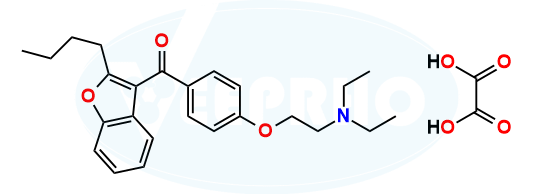
CAS 1397201-93-2 - Amiodarone EP Impurity C (Oxalate Salt) VE0020391
- Amiodarone EP Impurity D VL1390005
CAS 1951-26-4 - Amiodarone EP Impurity E VL1390006
CAS 52490-15-0 - Amiodarone EP Impurity F VL1390004
CAS 147030-50-0 - Amiodarone EP Impurity G VL1390007
CAS 1087223-70-8 - Amiodarone EP Impurity G (HCl Salt) VE006757
- Amiodarone EP Impurity I VE0020390
CAS 290295-98-6
- Amiodarone EP Impurity A VL1390001
- Angebot für dieses Set anfragen
Alle USP-Verunreinigungen von Amiodarone
14 ProdukteDie 14 Produkte ansehen
- Amiodarone EP Impurity A VL1390001
CAS 23551-25-9 - Amiodarone EP Impurity A (HCl salt) VE006504
CAS 95820-13-6 - Amiodarone EP Impurity A (Oxalate) VE0022948
CAS 2984442-50-2 - Amiodarone EP Impurity B VL1390002
CAS 96027-74-6 - Amiodarone EP Impurity B (Free Base) VE0020389
CAS 83409-32-9 - Amiodarone EP Impurity C VE006467
CAS 85642-08-6 - Amiodarone EP Impurity C (HCl salt) VL1390003
CAS 1397201-93-2 - Amiodarone EP Impurity C (Oxalate Salt) VE0020391
- Amiodarone EP Impurity D VL1390005
CAS 1951-26-4 - Amiodarone EP Impurity E VL1390006
CAS 52490-15-0 - Amiodarone EP Impurity F VL1390004
CAS 147030-50-0 - Amiodarone EP Impurity G VL1390007
CAS 1087223-70-8 - Amiodarone EP Impurity G (HCl Salt) VE006757
- Amiodarone EP Impurity I VE0020390
CAS 290295-98-6
- Amiodarone EP Impurity A VL1390001

Zusätzliche Informationen zu CAS 1397201-93-2
| Wirkstoff | Amiodarone |
|---|---|
| Produkttyp | Verunreinigungsstandards |
| IUPAC-Name | (2-Butylbenzofuran-3-yl)[4-[2-(diethylamino)ethoxy]-3-iodophenyl]methanone hydrochloride |
| Name im EP | Amiodarone EP Impurity C |
| Name in der USP | Amiodarone Related Compound C |
| SMILES | CCCCc1oc2ccccc2c1C(=O)c1ccc(OCCN(CC)CC)c(I)c1.Cl |
| InChIKey | CHZUGGQFNLBEJM-UHFFFAOYSA-N |
| CHNS-Verhältnis (%) (berechnet) | C 54.02 · H 5.62 · N 2.52 · S 0.00 |
| Referenzen | Karmarkar | S. | et al. “Quality by Design (QbD) Based Development and Validation of an HPLC Method for Amiodarone Hydrochloride and Its Impurities in the Drug Substance.â€Â Journal of Pharmaceutical and Biomedical Analysis | vol. 100 | Nov. 2014 | pp. 167–74 | https://doi.org/10.1016/j.jpba.2014.07.002. |
| Beschreibung | Amiodaron EP Verunreinigung C, auch als Desiodo-Amiodaron-Hydrochlorid bezeichnet, ist das deiodierte Analogon von Amiodaron mit der CAS-Nummer 1397201-93-2. Mit der Summenformel C25H31ClINO3 und einer Molmasse von 555.1037 behält die Verbindung das Benzofuran-, Diethylaminoethoxy- und Benzoyl-Phenylether-Gerüst, jedoch ohne ein aromatisches Iodsubstituent. Sie entsteht typischerweise durch synthetische Deiodierung oder metabolische Umwandlung und kann als verwandte Substanz in Stabilitätsuntersuchungen auftreten. Für die Identifizierung und Quantifizierung werden üblicherweise LC-MS/MS mit hochauflösender Massenspektrometrie, ergänzend HPLC-UV und gegebenenfalls NMR zur Positionszuordnung eingesetzt. |
Angebot anfordern
"*" kennzeichnet Pflichtfelder
Weitere Produkte zu Amiodarone Verunreinigungen
| Struktur der Verunreinigung | Name der Verunreinigung | Katalog-Nr. |
|---|---|---|
| Amiodarone EP Impurity A | VL1390001 | |
| Amiodarone EP Impurity A (HCl salt) | VE006504 | |
| Amiodarone EP Impurity A (Oxalate) | VE0022948 | |
| Amiodarone EP Impurity B | VL1390002 | |
| Amiodarone EP Impurity B (Free Base) | VE0020389 | |
| Amiodarone EP Impurity C | VE006467 | |
 | Amiodarone EP Impurity C (Oxalate Salt) | VE0020391 |
| Amiodarone EP Impurity D | VL1390005 | |
| Amiodarone EP Impurity E | VL1390006 | |
| Amiodarone EP Impurity F | VL1390004 | |
| Amiodarone EP Impurity G | VL1390007 | |
 | Amiodarone EP Impurity G (HCl Salt) | VE006757 |
Alle verwandten Produkte zeigen N-Nitroso-Amiodarone-Verunreinigungen (4)