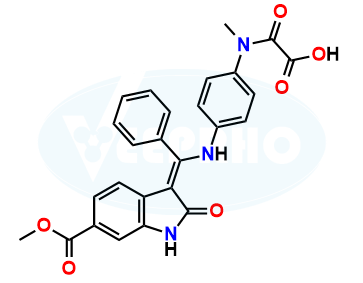
El nintedanib, comercializado con los nombres de marca Ofev y Vargatef, es un medicamento oral utilizado para el tratamiento de la fibrosis pulmonar idiopática (FPI) y, en combinación con otros medicamentos, para determinados tipos de cáncer de pulmón no microcítico (CPNM). Es un inhibidor de la tirosina quinasa que actúa inhibiendo múltiples vías que contribuyen a la formación de cicatrices en los tejidos (fibrosis) y a la proliferación de las células cancerosas. Al bloquear estas vías, el nintedanib ayuda a ralentizar la progresión de la fibrosis en los pulmones y puede reducir el crecimiento tumoral en pacientes con cáncer. Normalmente se prescribe como parte de un plan de tratamiento a largo plazo de la FPI o como terapia complementaria en el tratamiento del cáncer.
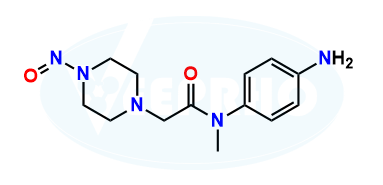
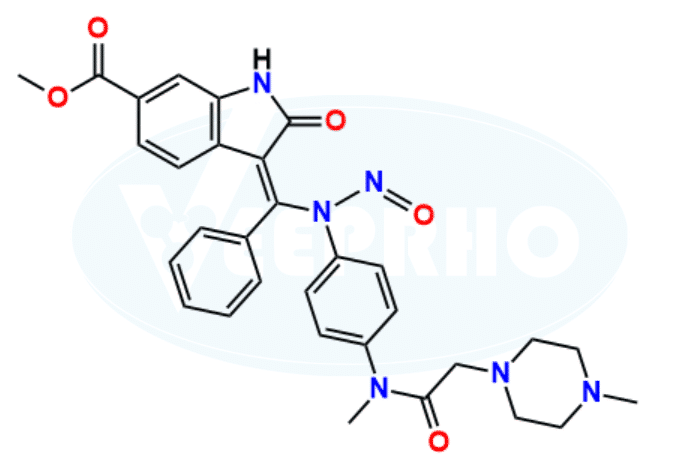
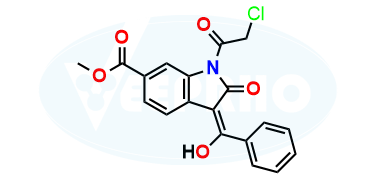
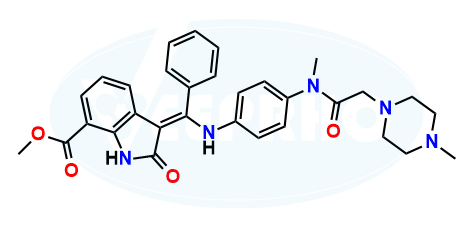
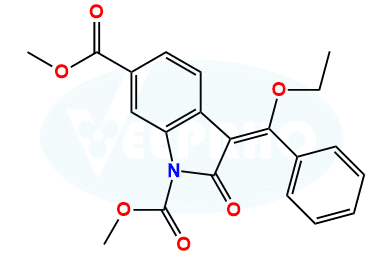
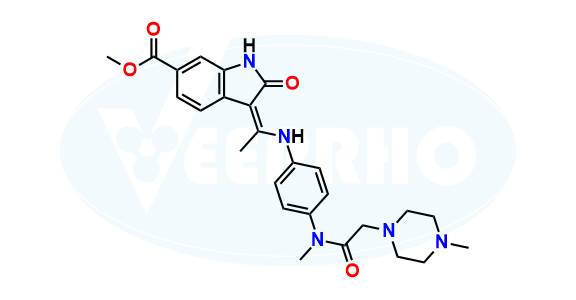
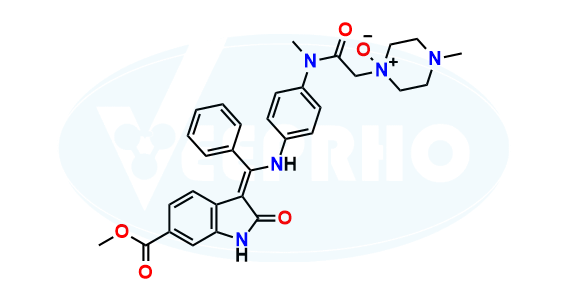
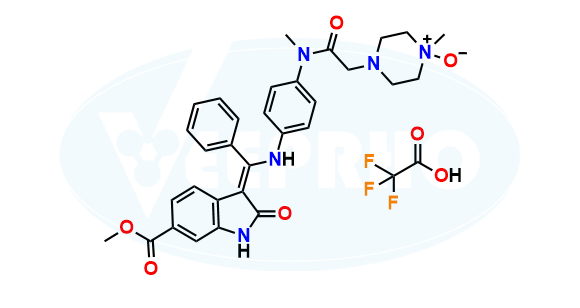
Nintedanib Related Compound During the production and storage of Nintedanib, impurities may form, which must be controlled to ensure the drug’s safety and efficacy. Regulatory authorities, including the U.S. Food and Drug Administration (FDA) and the European Medicines Agency (EMA), set guidelines on permissible impurity levels in Nintedanib formulations. FAQ's
Preguntas frecuentes
What is the Nintedanib drug used for?
Nintedanib is used to treat idiopathic pulmonary fibrosis (IPF), a chronic lung condition characterized by progressive scarring, and as an adjunct treatment for certain types of non-small cell lung cancer (NSCLC). It works to slow disease progression by inhibiting pathways that lead to fibrosis or tumor growth.
What is the mechanism of action of Nintedanib?
Nintedanib acts as a tyrosine kinase inhibitor, targeting multiple receptors involved in fibrosis and cancer cell proliferation. By blocking receptors associated with platelet-derived growth factor (PDGF), fibroblast growth factor (FGF), and vascular endothelial growth factor (VEGF), Nintedanib reduces the signaling that promotes scarring in the lungs and tumor growth.
Is Nintedanib a chemotherapy drug?
Nintedanib is not a traditional chemotherapy drug. Instead, it is a tyrosine kinase inhibitor that targets growth factor receptors involved in fibrosis and certain cancer pathways. It is used as a supportive therapy in lung cancer treatment but differs from chemotherapy in its action and side effect profile.
What is the life expectancy of someone on Nintedanib?
The impact of Nintedanib on life expectancy varies depending on the condition being treated. For IPF, Nintedanib has been shown to slow disease progression, potentially extending life expectancy for some patients. In cancer treatment, Nintedanib may help improve survival outcomes when used in combination with other therapies. However, individual responses vary, and life expectancy should be discussed with a healthcare provider.