

- 100% accuracy of data
- 24/7 scientific support
- 0% tolerance in quality of product
Stock Locations
- New Jersey, USA
- Czech Republic, EU
* Stock subject to availability.
Documentation
Includes: HPLC, MASS/LC-MS, 1H NMR, FT-IR, Potency, Structure Elucidation Report (SER), and additional analytical data depending on the product.
100-51-6
Benzalkonium Chloride EP Impurity A
● Not Available
| Catalogue No.: | VL3850030 |
|---|---|
| CAS No.: | 100-51-6 |
| Mol. Formula: | C7H8O |
| Mol. Weight: | 108.14 g/mol |
For laboratory use only: analytical, development and regulatory purposes. Supplied in mg quantities. Not for human or veterinary use.
Request a quote for a set
- Request quote for this set
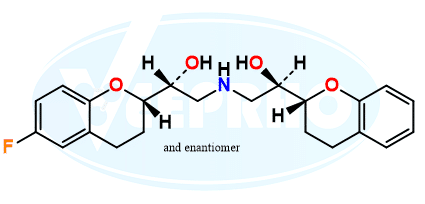
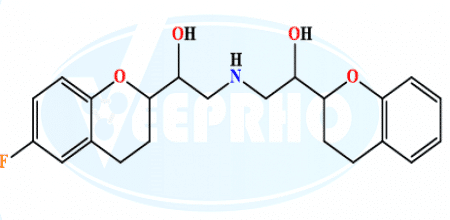
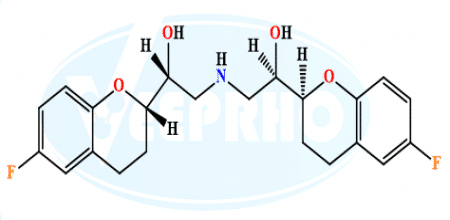
All EP impurities of Nebivolol
6 productsSee the 6 products
- Benzalkonium Chloride EP Impurity A VL3850030
CAS 100-51-6 - Nebivolol EP Impurity A VE0011504
CAS 1416402-13-5 - Nebivolol EP Impurity B VE0011506
CAS 99200-09-6 - Nebivolol EP Impurity C VE0011505
- Nebivolol EP Impurity D VE009079
CAS 119365-22-9 - rac N-Benzyl Nebivolol VE007764
CAS 929706-85-4
- Benzalkonium Chloride EP Impurity A VL3850030
- Request quote for this set
All USP impurities of Nebivolol
7 productsSee the 7 products
- Benzalkonium Chloride EP Impurity A VL3850030
CAS 100-51-6 - Nebivolol Desfluoro VL490003
- Nebivolol Related Compound A VL490001
- Nebivolol Related Compound A (HCl salt) VE0021510
- Nebivolol Related Compound B VL490002
- Nebivolol Related Compound C VE006876
CAS 876514-31-7 - Nebivolol Related Compound D VE006877
CAS 793669-26-8
- Benzalkonium Chloride EP Impurity A VL3850030

Additional information on CAS 100-51-6
| Parent drug | Benzalkonium Chloride |
|---|---|
| Product type | Impurity standards |
| IUPAC name | phenylmethanol |
| EP name | Benzalkonium Chloride EP Impurity A |
| USP name | Benzyl Alcohol |
| Pharmacopeial synonyms | Benzyl Alcohol |
| Other Synonyms | Benzylic Alcohol; Phenylmethyl Alcohol |
| SMILES | OCC1=CC=CC=C1 |
| InChI | InChI=1S/C7H8O/c8-6-7-4-2-1-3-5-7/h1-5,8H,6H2 |
| InChIKey | WVDDGKGOMKODPV-UHFFFAOYSA-N |
| CHNS Ratio (%) (calculated) | C 77.75 · H 7.46 · N 0.00 · S 0.00 |
| References | “HPLC-UV vs. UPLC-DAD for Estimation of Tinidazole | Benzyl Alcohol and Hydrocortisone Acetate Simultaneously with Tioconazole and Its Related Impurities in Bulk and Pharmaceutical Formulations.†Analytical Chemistry Letters | 2017 | www.tandfonline.com/doi/abs/10.1080/22297928.2017.1308269.? ?Abend | Andreas M. | et al. “Concerning the Stability of Benzyl Alcohol: Formation of Benzaldehyde Dibenzyl Acetal under Aerobic Conditions.†Journal of Pharmaceutical and Biomedical Analysis | vol. 34 | no. 5 | Ma |
| Description | Benzalkonium Chloride EP Impurity A, identified as benzyl alcohol (CAS 100-51-6), is an aromatic primary alcohol with the molecular formula C7H8O and molecular weight 108.14 g/mol. In benzalkonium chloride materials, it may arise as a residual process-related impurity or as a degradation product from benzyl-containing starting materials. The analyte is polar yet sufficiently volatile for gas chromatographic determination, and trace-level quantification commonly requires GC-MS or headspace GC-MS, with LC-MS/MS used where matrix complexity warrants orthogonal confirmation. Its presence is regulated through pharmacopeial impurity control because it can influence specification compliance and overall impurity profiling. |
Request a Quote
"*" indicates required fields
Other products related to Nebivolol impurities
| Impurity structure | Name of Impurity | Catalogue No. |
|---|---|---|
| (2S, 2’S)-6-Fluoro-2-(2’-oxiranyl)chromane | VE008863 | |
| (2S)-2-(6-Fluorochroman-2-yl)-2-Hydroxyethyl Acetate | VE0025579 | |
| (R)-1-((S)-Chroman-2-yl)-2-(((R)-2-((R)-6-fluorochroman-2-yl)-2-hydroxyethyl)amino)ethan-1-ol Hydrochloride | VE0021616 | |
| (S,S,S,S)-Nebivolol Hydrochloride | VE0021615 | |
| (S)-2-((R)-6-fluorochroman-2-yl)-2-(tosyloxy)ethyl acetate | VE0025578 | |
| 6-Fluoro-4-oxochroman-2-carboxylic acid | VE0024684 | |
| 6-Fluorochromane-2-carbaldehyde | VE0024682 | |
| Benzylated Nebivolol | VL490005 | |
 | Benzylated Nebivolol Oxylated Salt | VE008481 |
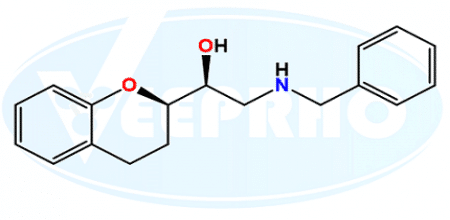 | Des Fluoro FAM Nebivolol | VL490025 |
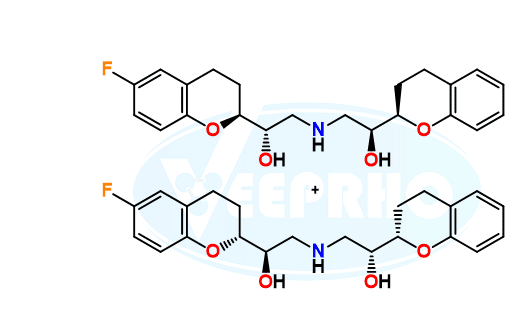 | Desfluoro FAM Nebivolol | VE0011629 |
| Desfluoro Nebivolol impurity | VE008472 |
Show all related products N-Nitroso Nebivolol impurities (2)