
- 100% accuracy of data
- 24/7 scientific support
- 0% tolerance in quality of product
Mutagenicity assessment (ICH M7)
Potentially mutagenic impurity (ICH M7 Class 1–3).
N-nitroso compound: ICH M7 cohort of concern.Stock Locations
- New Jersey, USA
- Czech Republic, EU
* Stock subject to availability.
Documentation
Includes: HPLC, MASS/LC-MS, 1H NMR, FT-IR, Potency, Structure Elucidation Report (SER), and additional analytical data depending on the product.
86756-31-2
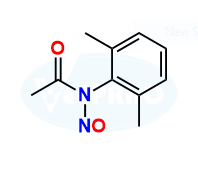
N-Nitroso Lidocaine EP Impurity C
● In Stock
| Catalogue No.: | VE0025007 |
|---|---|
| CAS No.: | 86756-31-2 |
| Mol. Formula: | C10H12N2O2 |
| Mol. Weight: | 192.22 g/mol |
For laboratory use only: analytical, development and regulatory purposes. Supplied in mg quantities. Not for human or veterinary use.
Request a quote for a set
- Request quote for this set
All nitrosamine impurities of Lidocaine
8 productsSee the 8 products
- N-Nitroso Lidocaine VE0024811
- N-Nitroso Lidocaine; Synthesis Attempts and Failure Report (NAP Test) VE0028705
- N-Nitroso Lidocaine EP Impurity C VE0025007
CAS 86756-31-2 - N-Nitroso Lidocaine EP Impurity D VE0017293
CAS 3033377-17-9 - N-Nitroso Lidocaine EP Impurity E VE0017294
- N-Nitroso Lidocaine EP Impurity G VE0017297
- N-Nitroso Lidocaine Impurity 1 VE007838
- N2-Nitroso-N2-Desethyl Lidocaine EP Impurity I VE0025008
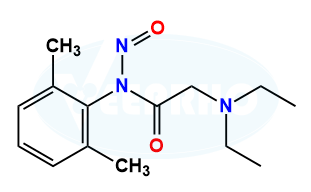
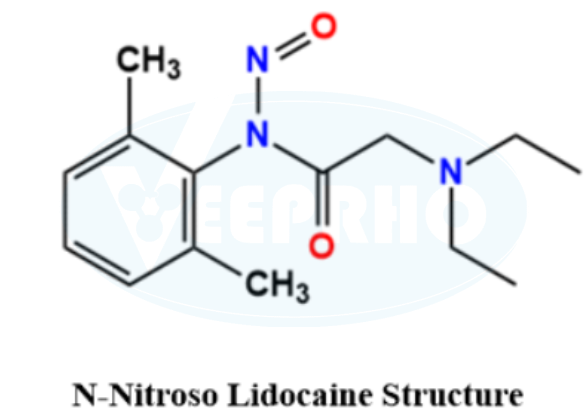
Additional information on CAS 86756-31-2
| Parent drug | Lidocaine |
|---|---|
| Product type | Impurity standards, Nitroso impurities |
| IUPAC name | N-(2,6-dimethylphenyl)-N-nitrosoacetamide |
| SMILES | CC(=O)N(N=O)c1c(C)cccc1C |
| InChIKey | JXMUYKRNLSIMPM-UHFFFAOYSA-N |
| CHNS Ratio (%) (calculated) | C 62.49 · H 6.29 · N 14.57 · S 0.00 |
| Description | N-Nitroso Lidocaine EP Impurity C (CAS 86756-31-2) is a nitrosamine-related contaminant characterized by regulatory concern due to potential genotoxicity and low acceptable limits in drug substance impurity profiles. Analytical identification typically employs GC-MS or LC-MS/MS with isotope dilution for trace quantitation | supported by HPLC retention time matching and fragmentation pattern confirmation. Formation pathways include nitrosation of secondary amines under acidic or oxidative conditions | making control strategies such as raw material quality | nitrosating agent monitoring | optimized pH | and controlled storage essential. Routine batch release requires validated sensitive methods | established specification limits consistent with ICH M7 guidance | and risk-based mitigation to ensure patient safety and compliance. |
Request a Quote
"*" indicates required fields
Other products related to Lidocaine and Nitroso impurities
| Impurity structure | Name of Impurity | Catalogue No. |
|---|---|---|
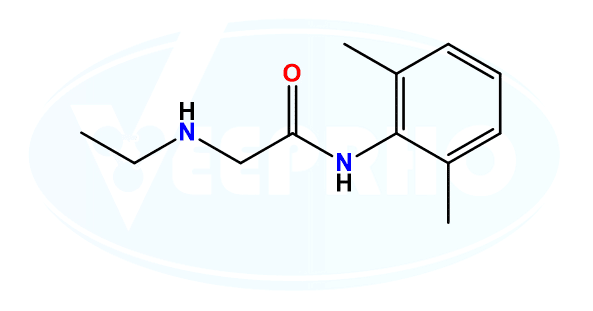 | Lidocaine BP Impurity D | VL1040004 |
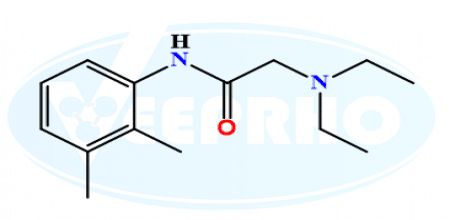 | Lidocaine BP Impurity F | VL1040020 |
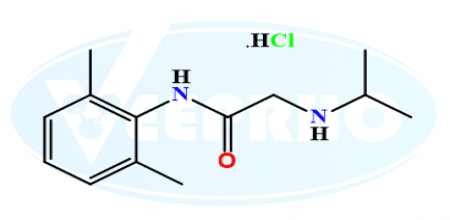 | Lidocaine BP Impurity G | VL1040007 |
| Lidocaine BP Impurity K | VL1040019 | |
| Lidocaine EP Impurity A | VL1040001 | |
| Lidocaine EP Impurity B | VL1040002 | |
| Lidocaine EP Impurity C | VL1040003 | |
| Lidocaine EP Impurity D (HCl Salt) | VE0010174 | |
| Lidocaine EP Impurity E | VL1040005 | |
| Lidocaine EP Impurity E (HCl Salt) | VE0022727 | |
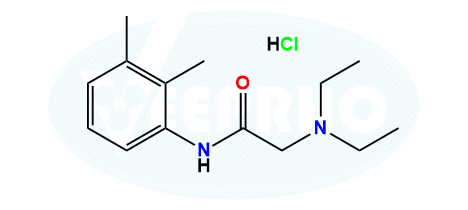 | Lidocaine EP Impurity F | VE0016064 |
| Lidocaine EP Impurity G | VE0016063 |
Show all related products N-Nitroso Lidocaine impurities (7)