

- 100% accuracy of data
- 24/7 scientific support
- 0% tolerance in quality of product
Mutagenicity assessment (ICH M7)
Potentially mutagenic impurity (ICH M7 Class 1–3).
N-nitroso compound: ICH M7 cohort of concern.Stock Locations
- New Jersey, USA
- Czech Republic, EUIn stock
* Stock subject to availability.
Documentation
Includes: HPLC, MASS/LC-MS, 1H NMR, FT-IR, Potency, Structure Elucidation Report (SER), and additional analytical data depending on the product.
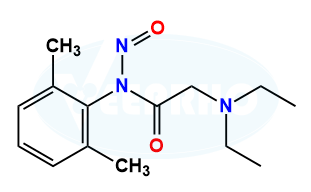
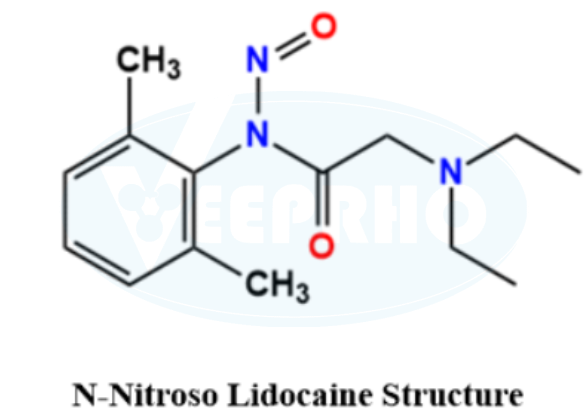
N-Nitroso Lidocaine EP Impurity G
● In Stock
| Catalogue No.: | VE0017297 |
|---|---|
| CAS No.: | N/A |
| Mol. Formula: | C13H19N3O2 |
| Mol. Weight: | 249.31 g/mol |
For laboratory use only: analytical, development and regulatory purposes. Supplied in mg quantities. Not for human or veterinary use.
Packs and prices
| Pack | Price | Qty |
|---|---|---|
| 100 mg | USD 129.00 |
Prices shown are valid for issuing a purchase order.
Prices are subject to change depending on compound availability and the cost of synthesis based on current raw material costs. Veeprho reserves the right to change prices without notice.
Need another pack size or quantity? Request a custom quoteHow can we help?
Request a quote for a set
- Request quote for this set
All nitrosamine impurities of Lidocaine
8 productsSee the 8 products
- N-Nitroso Lidocaine VE0024811
- N-Nitroso Lidocaine; Synthesis Attempts and Failure Report (NAP Test) VE0028705
- N-Nitroso Lidocaine EP Impurity C VE0025007
CAS 86756-31-2 - N-Nitroso Lidocaine EP Impurity D VE0017293
CAS 3033377-17-9 - N-Nitroso Lidocaine EP Impurity E VE0017294
- N-Nitroso Lidocaine EP Impurity G VE0017297
- N-Nitroso Lidocaine Impurity 1 VE007838
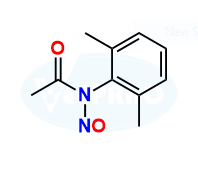
- N2-Nitroso-N2-Desethyl Lidocaine EP Impurity I VE0025008
Additional information on N-Nitroso Lidocaine EP Impurity G
| Parent drug | Lidocaine |
|---|---|
| Product type | Impurity standards, Nitroso impurities |
| IUPAC name | N-(2,6-dimethylphenyl)-2-(isopropyl(nitroso)amino)acetamide |
| SMILES | Cc1cccc(C)c1NC(=O)CN(N=O)C(C)C |
| InChIKey | XMYWZRJWUXEMPC-UHFFFAOYSA-N |
| CHNS Ratio (%) (calculated) | C 62.63 · H 7.68 · N 16.85 · S 0.00 |
| References | - |
| Description | N-Nitroso Lidocaine EP Impurity G is a nitrosamine-related impurity associated with lidocaine chemistry and is structurally defined by the molecular formula C13H19N3O2 and molecular weight 249.31 g/mol. As an N-nitroso amide derivative, it is of regulatory concern because nitrosamines are commonly assessed as potentially genotoxic constituents under ICH M7 principles and current pharmacopeial impurity controls. Its formation is typically linked to nitrosating conditions during synthesis or through degradation pathways involving secondary amine precursors. Determination generally requires highly selective LC-MS/MS, and, where volatility permits, confirmatory GC-MS, with low-level quantification often relying on isotopically guided mass spectrometric methods. |
Request a Quote
"*" indicates required fields
Other products related to Lidocaine and Nitroso impurities
| Impurity structure | Name of Impurity | Catalogue No. |
|---|---|---|
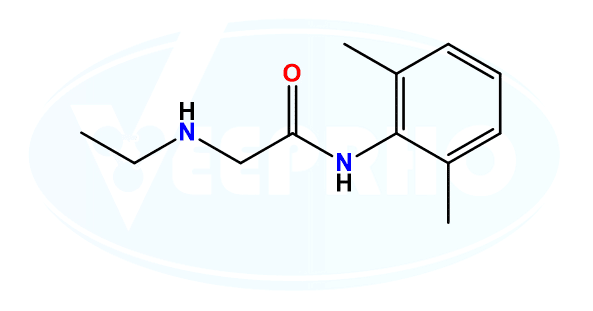 | Lidocaine BP Impurity D | VL1040004 |
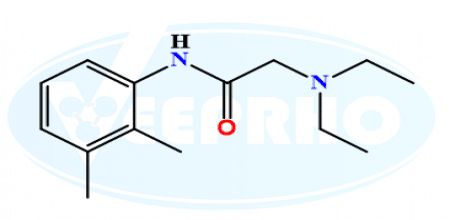 | Lidocaine BP Impurity F | VL1040020 |
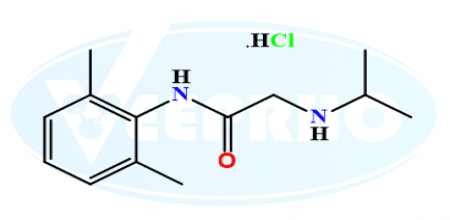 | Lidocaine BP Impurity G | VL1040007 |
| Lidocaine BP Impurity K | VL1040019 | |
| Lidocaine EP Impurity A | VL1040001 | |
| Lidocaine EP Impurity B | VL1040002 | |
| Lidocaine EP Impurity C | VL1040003 | |
| Lidocaine EP Impurity D (HCl Salt) | VE0010174 | |
| Lidocaine EP Impurity E | VL1040005 | |
| Lidocaine EP Impurity E (HCl Salt) | VE0022727 | |
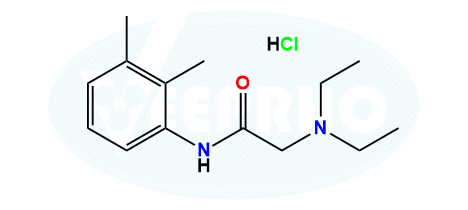 | Lidocaine EP Impurity F | VE0016064 |
| Lidocaine EP Impurity G | VE0016063 |
Show all related products N-Nitroso Lidocaine impurities (7)