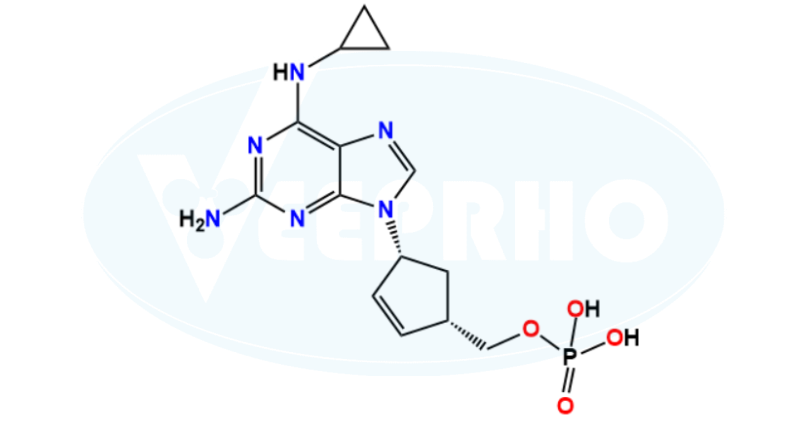
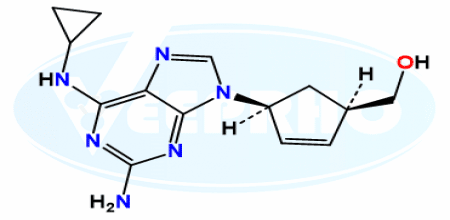
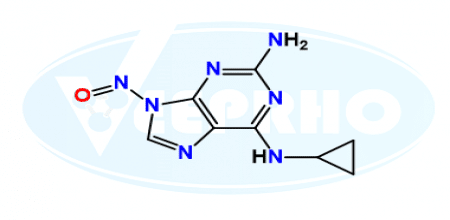
Abacavir, sold under the brand name Ziagen among others, is a medication used to treat HIV/AIDS. Similar to other nucleoside analog reverse-transcriptase inhibitors (NRTIs), abacavir is used together with other HIV medications, and is not recommended by i.e. it should not be used as monotherapy; standard practice is to combine abacavir with at least one other active antiretroviral agent. The active moiety is abacavir sulfate which is orally absorbed and intracellularly phosphorylated to the active carbovir triphosphate analog that competitively inhibits HIV-1 reverse transcriptase and causes DNA chain termination. Key clinical considerations include screening for the HLA-B star 5701 allele prior to initiation because a positive result predicts a potentially severe hypersensitivity reaction, dose adjustment or caution in moderate to severe hepatic impairment, and the need to use abacavir as part of a fully suppressive combination regimen to avoid resistance development.

Parent: Abacavir

Parent: Abacavir

Parent: Abacavir

Parent: Abacavir

Parent: Abacavir

Parent: Abacavir / Abacavir Sulfate

Parent: Abacavir

Parent: Abacavir

Parent: Abacavir

Parent: Abacavir
Typical quality control specifications for abacavir active pharmaceutical ingredient and finished dosage forms characterize related compounds and impurities by validated chromatographic methods such as HPLC or LC-MS. Common related compounds and degradants monitored include hydrolytic and oxidative products, deamination products, descyclopropyl species and synthetic intermediates or residual process-related impurities. Typical specification ranges used in many regulatory dossiers and pharmacopeial monographs set individual identified impurity limits commonly in the range of 0.1 to 0.5 percent weight by weight, with unspecified impurity reporting thresholds at or below 0.1 percent when genotoxic concern exists, and a total impurities limit frequently around 1.0 to 2.0 percent w/w; exact numeric limits are established per manufacturer and regulatory authority, and are confirmed by stability and forced-degradation studies.
Abacavir is a nucleoside analog reverse-transcriptase inhibitor, an antiretroviral agent that after intracellular phosphorylation acts as a nucleoside triphosphate analog to inhibit HIV-1 reverse transcriptase and terminate viral DNA chain elongation.
Patients with a known hypersensitivity to abacavir or a history of abacavir-associated hypersensitivity reaction should not take it. Individuals who test positive for HLA-B*5701 are at significantly increased risk of severe hypersensitivity and abacavir is generally contraindicated. Caution or dose adjustment is needed in significant hepatic impairment; consult product labeling for specific contraindications and precautions.
Abacavir syndrome, or abacavir hypersensitivity reaction, is a serious and potentially life-threatening response that can occur in patients taking abacavir. Symptoms usually develop within the first six weeks of treatment and include fever, rash, gastrointestinal symptoms (such as nausea, vomiting, and diarrhea), and respiratory symptoms (such as cough and shortness of breath). If not promptly recognized and treated, this reaction can be severe. Patients who experience symptoms of hypersensitivity should discontinue abacavir immediately and seek medical attention. Rechallenge with abacavir after a hypersensitivity reaction is contraindicated due to the risk of severe, potentially fatal reactions.
Abacavir is converted inside cells to carbovir triphosphate, a guanosine analog that competitively inhibits HIV reverse transcriptase and becomes incorporated into viral DNA, causing premature chain termination and inhibition of viral replication.
When used as part of a combination antiretroviral regimen, abacavir contributes to durable suppression of HIV-1 RNA, helps preserve or restore immune function, offers convenient oral dosing, and provides an alternative backbone for patients with intolerance or contraindications to other NRTIs, provided HLA-B*5701 screening and appropriate clinical monitoring are performed.