Impurezas de Abacavir

Abacavir, sold under the brand name Ziagen among others, is a medication used to treat HIV/AIDS. Similar to other nucleoside analog reverse-transcriptase inhibitors (NRTIs), abacavir is used together with other HIV medications, and is not recommended by i.e. it should not be used as monotherapy; standard practice is to combine abacavir with at least one other active antiretroviral agent. The active moiety is abacavir sulfate which is orally absorbed and intracellularly phosphorylated to the active carbovir triphosphate analog that competitively inhibits HIV-1 reverse transcriptase and causes DNA chain termination. Key clinical considerations include screening for the HLA-B star 5701 allele prior to initiation because a positive result predicts a potentially severe hypersensitivity reaction, dose adjustment or caution in moderate to severe hepatic impairment, and the need to use abacavir as part of a fully suppressive combination regimen to avoid resistance development.

Solicitar cotización de un conjunto

1–42 de 42 resultados26 en stock

EstructuraNombre del productoN.º CASN.º de cat.Disponibilidad
H2NNHNNNOPOHOOHNAbacavir 5’-PhosphateC14H19N6O4PN.º CAS 136470-77-4 · VL760020136470-77-4VL760020Under Development
ONNNHNNH2NOHAbacavir CarboxylateC14H16N6O2N.º CAS 384380-52-3 · VL760021384380-52-3VL760021Under Development
H2NNHNNHNNAbacavir Cyclopropyl Diamino Purine ImpuritySinónimos: Cyclopropyldiaminopurine AbacavirC8H10N6N.º CAS 120503-69-7 · VL760002 · En stock120503-69-7VL760002En stock
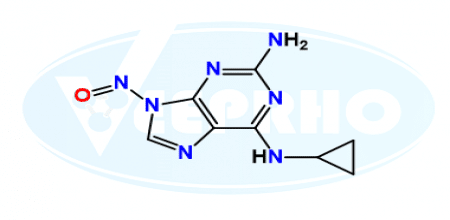
NH2NNNONNNONAbacavir Dinitroso ImpurityC8H8N8O2VE007759 · En stockVE007759En stock
H2NNHNNNHONAbacavir EP Impurity AC14H18N6ON.º CAS 136470-79-6 · VL760013 · En stock136470-79-6VL760013En stock
NH2NClNH2ONNNHNH2NNNAbacavir EP Impurity BNombre en la USP: Abacavir related compound DSinónimos: O-Pyrimidine Derivative AbacavirC18H21ClN10ON.º CAS 1443421-69-9 · VL760001 · En stock1443421-69-9VL760001En stock
H2NNNH2NNHONAbacavir EP Impurity CSinónimos: Descyclopropyl AbacavirC11H14N6ON.º CAS 124752-25-6 · VL760006 · En stock124752-25-6VL760006En stock
H2NNHNNNHONAbacavir EP Impurity D (Free Base)Sinónimos: trans AbacavirC14H18N6ON.º CAS 783292-37-5 · VE0010465 · En stock783292-37-5VE0010465En stock
Estructura de Abacavir EP Impurity D (HCl Salt)Abacavir EP Impurity D (HCl Salt)Sinónimos: trans-AbacavirC14H20Cl2N6ON.º CAS 267668-71-3 · VL760005 · En stock267668-71-3VL760005En stock
H2NNHNNNHONAbacavir EP Impurity EC14H20N6ON.º CAS 208762-35-0 · VL760014 · En stock208762-35-0VL760014En stock
ONNNHNH2NNAbacavir EP Impurity FSinónimos: T-Butyl Derivative AbacavirC18H26N6ON.º CAS 1443421-68-8 · VL760003 · En stock1443421-68-8VL760003En stock
Estructura de Abacavir Ethanolate ImpurityAbacavir Ethanolate ImpurityC13H17N5O2VL760004 · En stockVL760004En stock
H2NNClNNHONAbacavir Impurity 1C11H14ClN5ON.º CAS 2022943-79-7 · VL760011 · En stock2022943-79-7VL760011En stock
ClHNH2HOAbacavir Impurity 3 (HCl Salt)C6H12ClNON.º CAS 168960-19-8 · VE0012173 · En stock168960-19-8VE0012173En stock
Estructura de Abacavir Impurity 4Abacavir Impurity 4C12H12ClN5O2VL760015VL760015Under Development
Estructura de Abacavir Impurity 5Abacavir Impurity 5C17H18Cl2N8O3VL760016VL760016Under Development
Estructura de Abacavir Impurity 6Abacavir Impurity 6C15H20N6O2VL760017VL760017Under Development
NNNClNNClNAbacavir Impurity 7C10H14Cl2N6N.º CAS 171887-01-7 · VE0011535171887-01-7VE0011535Under Development
NNClNNH2NClAbacavir Impurity 8C7H9Cl2N5N.º CAS 171887-02-8 · VE0011536171887-02-8VE0011536Under Development
Estructura de Abacavir Methanolate ImpurityAbacavir Methanolate ImpurityC12H15N5O2VE008660 · En stockVE008660En stock
H2NNHNNNHON+O−Abacavir N-Oxide ImpurityC14H18N6O2N.º CAS 1443421-70-2 · VL7600101443421-70-2VL760010Under Development
H2NNClNH2NHHONAbacavir Related Compound BC10H14ClN5ON.º CAS 141271-12-7 · VL760025141271-12-7VL760025Under Development
ClHH2NNClNNHONAbacavir Related Compound CC11H13Cl2N5ON.º CAS 172015-79-1 · VL760026172015-79-1VL760026Under Development
Estructura de Abacavir-1-O-pyrimidine DerivativeAbacavir-1-O-pyrimidine DerivativeC16H17Cl2N9O3VE008692 · En stockVE008692En stock
H2NNNHNNOOOHOHOOHOHNAbacavir-5′-glucuronideC20H26N6O7N.º CAS 384329-76-4 · VL760019384329-76-4VL760019Under Development
H2NNHNNNNONABCRC-1 Nitroso Impurity-2C8H9N7OVE007758 · En stockVE007758En stock
Estructura de Avermectin B1a MonosaccharideAvermectin B1a MonosaccharideFármaco: IvermectinC41H60O11N.º CAS 71831-09-9 · VL497001071831-09-9VL4970010Under Development
Estructura de Clorabacavir RacemicClorabacavir RacemicC11H12ClN5O.HClN.º CAS 1918156-05-4 · VL760012 · En stock1918156-05-4VL760012En stock
NH2H2NNONHOHOHODecitabine Urea ImpurityFármaco: DecitabineC7H14N4O4N.º CAS 570410-72-9 · VL760027570410-72-9VL760027Under Development
H2NNHNNNHONent-Abacavir EP Impurity DC14H18N6ON.º CAS 2079853-44-2 · VE0025011 · En stock2079853-44-2VE0025011En stock
Estructura de Ethacrynic Acid Impurity 1Ethacrynic Acid Impurity 1Fármaco: Ethacrynic AcidC12H10Cl2O5VE0015370 · En stockVE0015370En stock
NH2NClNHOHNOHNN-(2-amino-4-chloro-6-(((1R,4S)-4-(hydroxymethyl)cyclopent-2-en-1-yl)amino)pyrimidin-5-yl)formamideC11H14ClN5O2N.º CAS 171887-04-0 · VE0019828 · En stock171887-04-0VE0019828En stock
Estructura de N-(4-(hydroxymethyl)cyclopent-2-enyl)acetamideN-(4-(hydroxymethyl)cyclopent-2-enyl)acetamideC8H13NO2VE009166 · En stockVE009166En stock
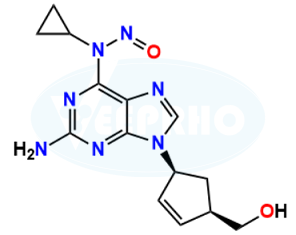
Estructura de N-Nitroso AbacavirN-Nitroso AbacavirC14H17N7O2VE006520VE006520Under Development
NH2NClNHONNOOHNN-Nitroso Abacavir Impurity 1C11H13ClN6O3VE007065 · En stockVE007065En stock
H2NNHNNNNONN-Nitroso Abacavir Impurity 3C8H11N7OVE007757 · En stockVE007757En stock
Estructura de Prucalopride-N-GalactopyranosidePrucalopride-N-GalactopyranosideC24H36ClN3O8VL760028VL760028Under Development
Estructura de Trans – AminocarbinolTrans – AminocarbinolC6H11NOVE008534 · En stockVE008534En stock
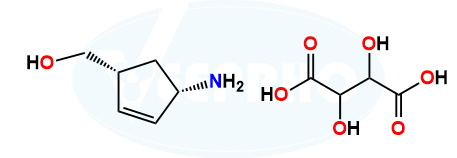
Estructura de ((1R,4S)-4-aminocyclopent-2-en-1-yl)methanol Tartrate((1R,4S)-4-aminocyclopent-2-en-1-yl)methanol TartrateC10H17NO7VE0019825 · En stockVE0019825En stock
Estructura de ((1S,4R)-4-(2-amino-6-chloro-9H-purin-9-yl)cyclopent-2-enyl)methyl formate((1S,4R)-4-(2-amino-6-chloro-9H-purin-9-yl)cyclopent-2-enyl)methyl formateC12H12ClN502VE009171 · En stockVE009171En stock
Estructura de 3 Hydroxy Abacavir3 Hydroxy AbacavirC14H20N6O2VL760008VL760008Under Development
Estructura de 3-Hydroxy Ipratropium Bromide3-Hydroxy Ipratropium BromideFármaco: IpratropiumC20H30NO4. BrVE0015400 · En stockVE0015400En stock

Abacavir and Related Compound

Typical quality control specifications for abacavir active pharmaceutical ingredient and finished dosage forms characterize related compounds and impurities by validated chromatographic methods such as HPLC or LC-MS. Common related compounds and degradants monitored include hydrolytic and oxidative products, deamination products, descyclopropyl species and synthetic intermediates or residual process-related impurities. Typical specification ranges used in many regulatory dossiers and pharmacopeial monographs set individual identified impurity limits commonly in the range of 0.1 to 0.5 percent weight by weight, with unspecified impurity reporting thresholds at or below 0.1 percent when genotoxic concern exists, and a total impurities limit frequently around 1.0 to 2.0 percent w/w; exact numeric limits are established per manufacturer and regulatory authority, and are confirmed by stability and forced-degradation studies.

Preguntas frecuentes

What type of drug is abacavir?

Abacavir is a nucleoside analog reverse-transcriptase inhibitor, an antiretroviral agent that after intracellular phosphorylation acts as a nucleoside triphosphate analog to inhibit HIV-1 reverse transcriptase and terminate viral DNA chain elongation.

Who cannot take abacavir?

Patients with a known hypersensitivity to abacavir or a history of abacavir-associated hypersensitivity reaction should not take it. Individuals who test positive for HLA-B*5701 are at significantly increased risk of severe hypersensitivity and abacavir is generally contraindicated. Caution or dose adjustment is needed in significant hepatic impairment; consult product labeling for specific contraindications and precautions.

What is abacavir syndrome?

Abacavir syndrome, or abacavir hypersensitivity reaction, is a serious and potentially life-threatening response that can occur in patients taking abacavir. Symptoms usually develop within the first six weeks of treatment and include fever, rash, gastrointestinal symptoms (such as nausea, vomiting, and diarrhea), and respiratory symptoms (such as cough and shortness of breath). If not promptly recognized and treated, this reaction can be severe. Patients who experience symptoms of hypersensitivity should discontinue abacavir immediately and seek medical attention. Rechallenge with abacavir after a hypersensitivity reaction is contraindicated due to the risk of severe, potentially fatal reactions.

What is the mechanism of action of abacavir?

Abacavir is converted inside cells to carbovir triphosphate, a guanosine analog that competitively inhibits HIV reverse transcriptase and becomes incorporated into viral DNA, causing premature chain termination and inhibition of viral replication.

What are the benefits of abacavir?

When used as part of a combination antiretroviral regimen, abacavir contributes to durable suppression of HIV-1 RNA, helps preserve or restore immune function, offers convenient oral dosing, and provides an alternative backbone for patients with intolerance or contraindications to other NRTIs, provided HLA-B*5701 screening and appropriate clinical monitoring are performed.