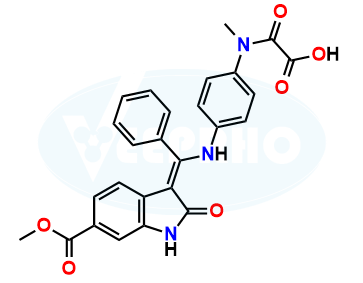
Nintedanib, das unter den Markennamen Ofev und Vargatef vertrieben wird, ist ein orales Arzneimittel zur Behandlung der idiopathischen Lungenfibrose (IPF) und, in Kombination mit anderen Arzneimitteln, bestimmter Arten des nicht-kleinzelligen Lungenkarzinoms (NSCLC). Es ist ein Tyrosinkinaseinhibitor, der wirkt, indem er mehrere Signalwege hemmt, die zur Gewebevernarbung (Fibrose) und zur Proliferation von Krebszellen beitragen. Durch die Blockade dieser Signalwege trägt Nintedanib dazu bei, das Fortschreiten der Fibrose in der Lunge zu verlangsamen, und kann das Tumorwachstum bei Krebspatienten verringern. Es wird typischerweise im Rahmen eines langfristigen Behandlungsplans bei IPF oder als Zusatztherapie bei der Krebsbehandlung verschrieben.
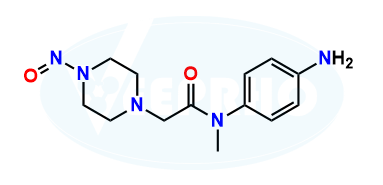
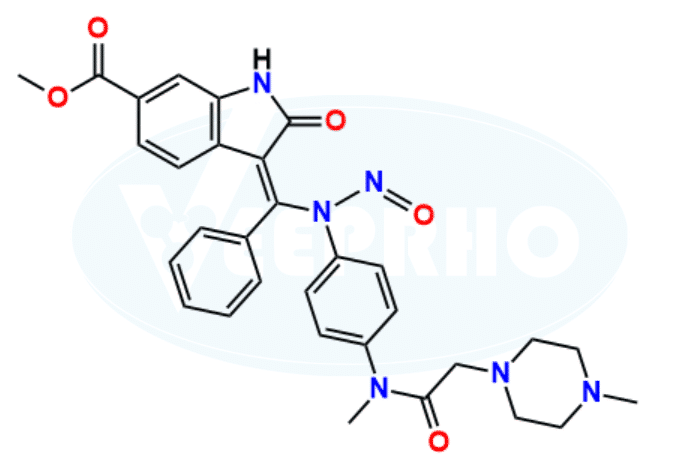
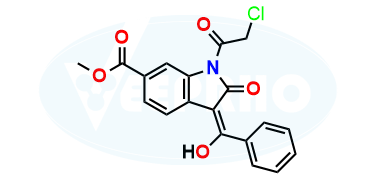
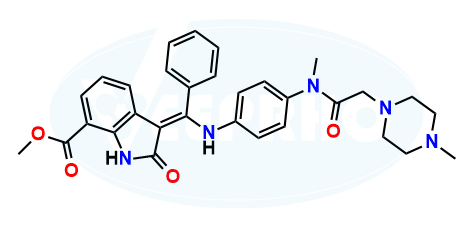
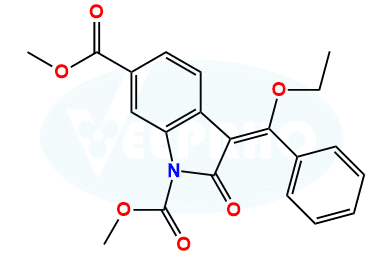
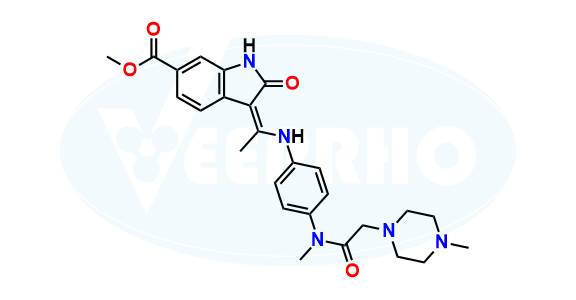
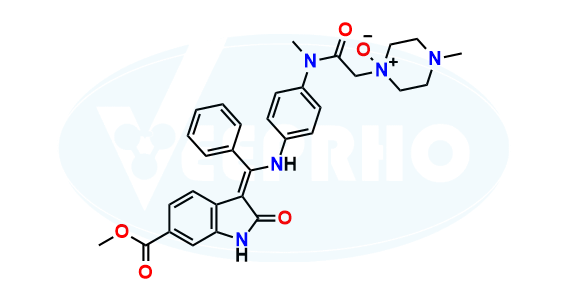
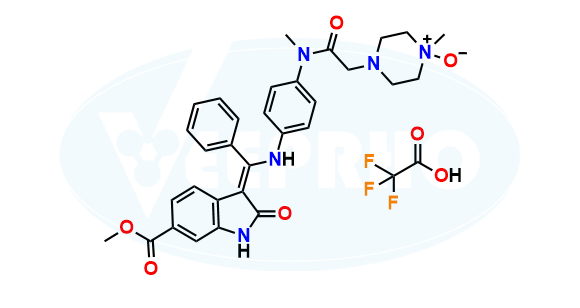
Nintedanib Related Compound During the production and storage of Nintedanib, impurities may form, which must be controlled to ensure the drug’s safety and efficacy. Regulatory authorities, including the U.S. Food and Drug Administration (FDA) and the European Medicines Agency (EMA), set guidelines on permissible impurity levels in Nintedanib formulations. FAQ's
Häufige Fragen
What is the Nintedanib drug used for?
Nintedanib is used to treat idiopathic pulmonary fibrosis (IPF), a chronic lung condition characterized by progressive scarring, and as an adjunct treatment for certain types of non-small cell lung cancer (NSCLC). It works to slow disease progression by inhibiting pathways that lead to fibrosis or tumor growth.
What is the mechanism of action of Nintedanib?
Nintedanib acts as a tyrosine kinase inhibitor, targeting multiple receptors involved in fibrosis and cancer cell proliferation. By blocking receptors associated with platelet-derived growth factor (PDGF), fibroblast growth factor (FGF), and vascular endothelial growth factor (VEGF), Nintedanib reduces the signaling that promotes scarring in the lungs and tumor growth.
Is Nintedanib a chemotherapy drug?
Nintedanib is not a traditional chemotherapy drug. Instead, it is a tyrosine kinase inhibitor that targets growth factor receptors involved in fibrosis and certain cancer pathways. It is used as a supportive therapy in lung cancer treatment but differs from chemotherapy in its action and side effect profile.
What is the life expectancy of someone on Nintedanib?
The impact of Nintedanib on life expectancy varies depending on the condition being treated. For IPF, Nintedanib has been shown to slow disease progression, potentially extending life expectancy for some patients. In cancer treatment, Nintedanib may help improve survival outcomes when used in combination with other therapies. However, individual responses vary, and life expectancy should be discussed with a healthcare provider.