Impurezas de Enzalutamide

A enzalutamida, comercializada sob o nome comercial Xtandi, é um medicamento antiandrogênio não esteroidal usado no tratamento do câncer de próstata. Atua inibindo os receptores de androgênio, bloqueando os efeitos da testosterona e de outros androgênios que estimulam o crescimento das células do câncer de próstata. A enzalutamida é comumente prescrita para o câncer de próstata resistente à castração (CPRC) metastático e não metastático e frequentemente faz parte de terapia combinada.

Solicitar cotação de um conjunto

1–36 de 36 resultados34 em estoque
EstruturaNome do produtoNº CASNº cat.Disponibilidade
ONNFFFSNOHOFEnzalutamide Carboxylic AcidC20H13F4N3O3SNº CAS 1242137-15-0 · VE006365 · Em estoque1242137-15-0VE006365Em estoque
NHONSNNFFFOEnzalutamide Desfluoro ImpurityC21H17F3N4O2SNº CAS 915087-16-0 · VE0010715 · Em estoque915087-16-0VE0010715Em estoque
SNNHONHONFFFN+C−Enzalutamide Desfluoro N-Methyl ImpurityC22H20F3N5O2SVE0028848 · Em estoqueVE0028848Em estoque
Estrutura de Enzalutamide Impurity 2Enzalutamide Impurity 2C9H36F3N2SNº CAS 143782-23-4 · VE006366 · Em estoque143782-23-4VE006366Em estoque
NHNH2OFOOHEnzalutamide Impurity 5C11H13FN2O3Nº CAS 1242137-20-7 · VE0015001 · Em estoque1242137-20-7VE0015001Em estoque
NNHSNHNFFFFFFEnzalutamide Impurity 7C17H8F6N4SNº CAS 1839619-50-9 · VE006573 · Em estoque1839619-50-9VE006573Em estoque
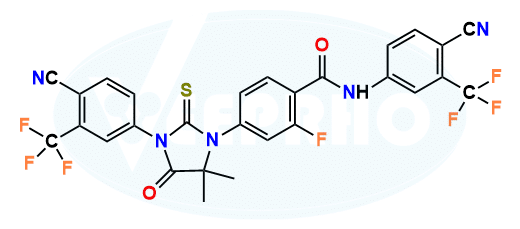
Estrutura de Enzalutamide Impurity 10Enzalutamide Impurity 10C28H16F7N5O2SNº CAS 3035510-32-5 · VE0015003 · Em estoque3035510-32-5VE0015003Em estoque
OOHBrFEnzalutamide Impurity 11C7H4BrFO2Nº CAS 112704-79-7 · VE0027618 · Em estoque112704-79-7VE0027618Em estoque
OONSNNFFFOFEnzalutamide Impurity 12C21H15F4N3O3SNº CAS 1802242-43-8 · VE0015007 · Em estoque1802242-43-8VE0015007Em estoque
NHONHONHNFFFFEnzalutamide Impurity 14C20H18F4N4O2Nº CAS 1289942-55-7 · VE0010439 · Em estoque1289942-55-7VE0010439Em estoque
ONNFFFONOHOFEnzalutamide Impurity 20C20H13F4N3O4Nº CAS 1242137-19-4 · VE0015008 · Em estoque1242137-19-4VE0015008Em estoque
NHOOHFOOHEnzalutamide Impurity 21C11H12FNO4Nº CAS 1332524-02-3 · VE0015010 · Em estoque1332524-02-3VE0015010Em estoque
NHONHONNFFFOFEnzalutamide Impurity 66C21H18F4N4O3Nº CAS 2029195-97-7 · VE0023865 · Em estoque2029195-97-7VE0023865Em estoque
NONSNNFFFONNFFFSEnzalutamide Impurity FC30H18F6N6O2S2Nº CAS 2810090-73-2 · VE00117152810090-73-2VE0011715Under Development
NHONSNH2NOFFFOFEnzalutamide Inhouse Impurity LC21H18F4N4O3SNº CAS 2030242-21-6 · VE008226 · Em estoque2030242-21-6VE008226Em estoque
NHONOONHNFFFFEnzalutamide Inhouse Impurity OC21H18F4N4O3Nº CAS 3035510-40-5 · VE008225 · Em estoque3035510-40-5VE008225Em estoque
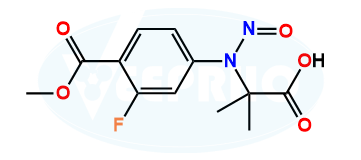
OONNOOOHFEnzalutamide Mono Nitroso Methyl EsterC12H13FN2O5VE0025432 · Em estoqueVE0025432Em estoque
NHONONNFFFOFEnzalutamide Oxo ImpurityC21H16F4N4O3Nº CAS 1242137-18-3 · VE006364 · Em estoque1242137-18-3VE006364Em estoque
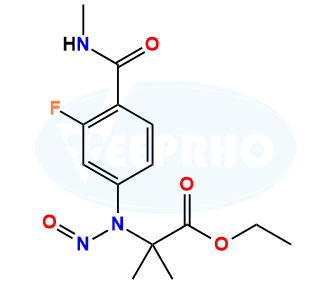
OONNOONHFEthyl 2-((3-fluoro-4-(methylcarbamoyl)phenyl)(nitroso)amino)-2-methylpropanoateC14H18FN3O4VE0024026 · Em estoqueVE0024026Em estoque
OONHONHFEthyl 2-(4- (Methylcarbamoyl)-3-Fluoro Phenylamino)-2-Methyl propanoateC14H19FN2O3Nº CAS 1258638-92-4 · VE006574 · Em estoque1258638-92-4VE006574Em estoque
Estrutura de Methyl (4-cyano-3-(trifluoromethyl)phenyl)carbamodithioateMethyl (4-cyano-3-(trifluoromethyl)phenyl)carbamodithioateC10H7F3N2S2VE009236 · Em estoqueVE009236Em estoque
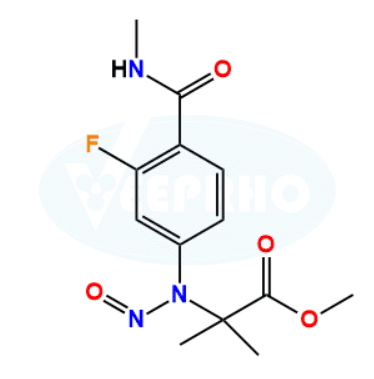
NHONNOOOFMethyl 2-((3-fluoro-4-(methylcarbamoyl)phenyl)(nitroso)amino)-2-methylpropanoateC13H16FN3O4VE0016455 · Em estoqueVE0016455Em estoque
NHONHOOFMethyl 2-((3-fluoro-4-(methylcarbamoyl)phenyl)amino)-2-methylpropanoateC13H17FN2O3Nº CAS 1332524-01-2 · VE0016352 · Em estoque1332524-01-2VE0016352Em estoque
ONNFFFSNH2NOFN-Desmethyl EnzalutamideC20H14F4N4O2SNº CAS 1242137-16-1 · VE006572 · Em estoque1242137-16-1VE006572Em estoque
NNOONSNNFFFOFN-Nitroso EnzalutamideC21H15F4N5O3SVE0022274VE0022274Under Development
NNHNOFFFN-Nitroso Enzalutamide Impurity 1C8H4F3N3OVE0024073 · Em estoqueVE0024073Em estoque
Estrutura de 1-(4-(methylcarbamoyl)-3-fluorophenyl)-3-(4-cyano-3-(trifluoromethyl)phenyl)thiourea1-(4-(methylcarbamoyl)-3-fluorophenyl)-3-(4-cyano-3-(trifluoromethyl)phenyl)thioureaC17H12F4N4OSVE006575 · Em estoqueVE006575Em estoque
Estrutura de 2-((3-fluoro-4-(methylcarbamoyl)phenyl)(nitroso)amino)-2-methylpropanoic acid2-((3-fluoro-4-(methylcarbamoyl)phenyl)(nitroso)amino)-2-methylpropanoic acidC12H14FN3O4VE0016456 · Em estoqueVE0016456Em estoque
NHONHOOHF2-((3-Fluoro-4-(methylcarbamoyl)phenyl)amino)-2-methylpropanoic acidC12H15FN2O3Nº CAS 1289942-66-0 · VE008224 · Em estoque1289942-66-0VE008224Em estoque
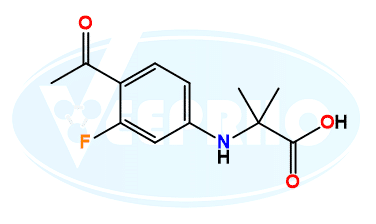
Estrutura de 2-[3-Fluoro-4-(methyl carbonyl) phenyl amino]-2-methyl propanoic acid2-[3-Fluoro-4-(methyl carbonyl) phenyl amino]-2-methyl propanoic acidC12H14FNO3VE0011809 · Em estoqueVE0011809Em estoque
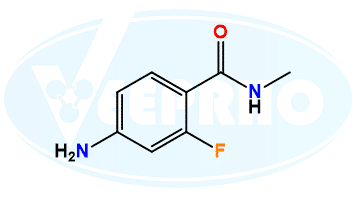
Estrutura de 2-Fluoro-4-amino-N-methylbenzamide2-Fluoro-4-amino-N-methylbenzamideC8H9FN2ONº CAS 915087-25-1 · VE0011808 · Em estoque915087-25-1VE0011808Em estoque
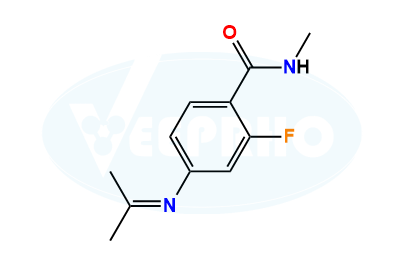
Estrutura de 2-fluoro-N-methyl-4-(propan-2-ylideneamino)benzamide2-fluoro-N-methyl-4-(propan-2-ylideneamino)benzamideC11H13FN2OVE0019943 · Em estoqueVE0019943Em estoque
OOHNNOOHO4-((2-carboxypropan-2-yl)(nitroso)amino)benzoic acidC11H12N2O5VE0024897 · Em estoqueVE0024897Em estoque
NHONNON4-((2-cyanopropan-2-yl)(nitroso)amino)-N-methylbenzamideC12H14N4O2VE0024873 · Em estoqueVE0024873Em estoque
OH2NNNNFFFOOF4-(3-(4-Cyano-3-(trifluoromethyl)phenyl)-5,5-dimethyl-2,4-dioxoimidazolidin-1-yl)-2-fluorobenzamideC20H14F4N4O3Nº CAS 1242137-17-2 · VE0027129 · Em estoque1242137-17-2VE0027129Em estoque
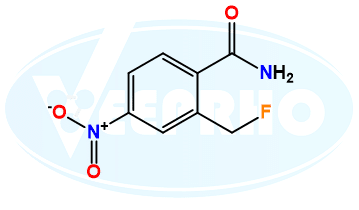
Estrutura de 4-Nitro-2-fluoro methyl benzamide4-Nitro-2-fluoro methyl benzamideC8H7FN2O3VE0011807 · Em estoqueVE0011807Em estoque

Enzalutamide Related Compound

During the production and storage of Enzalutamide, related compounds and impurities may form, which must be controlled to ensure the drug’s safety and efficacy. Regulatory authorities, such as the U.S. Food and Drug Administration (FDA), provide strict guidelines on permissible impurity levels in Enzalutamide formulations. Key aspects of Enzalutamide-related compounds and impurities include:

  1. Related Substances: These are chemically similar compounds that may form during the synthesis of Enzalutamide. Monitoring these related substances is critical to maintain the medication’s safety and effectiveness.
  2. Degradation Products: Enzalutamide may degrade over time due to exposure to environmental factors such as heat, light, or moisture. These degradation products can affect the drug’s stability and therapeutic potential.
  3. Residual Solvents: Trace amounts of solvents used during manufacturing may remain in the final product. Regulatory standards ensure these are within permissible limits to guarantee patient safety.

Advanced analytical methods, such as High-Performance Liquid Chromatography (HPLC), are used to detect and quantify Enzalutamide-related compounds and impurities, ensuring compliance with stringent quality standards.

Perguntas frequentes

Is Enzalutamide a form of chemotherapy?

No, Enzalutamide is not a form of chemotherapy. It is a nonsteroidal antiandrogen medication that works by blocking androgen receptors, inhibiting the growth of prostate cancer cells. Unlike chemotherapy, it does not target rapidly dividing cells throughout the body.

What is the drug Enzalutamide used for?

Enzalutamide is used to treat metastatic and non-metastatic castration-resistant prostate cancer (CRPC). It is also prescribed for metastatic hormone-sensitive prostate cancer (mHSPC) as part of a combination therapy.

What is the success rate of Enzalutamide?

The success rate of Enzalutamide varies based on individual cases and stages of prostate cancer. Clinical trials have shown that it significantly delays disease progression and extends overall survival in patients with castration-resistant prostate cancer.

What is the difference between Abiraterone and Enzalutamide?

Both Abiraterone and Enzalutamide are used to treat prostate cancer but work differently. Abiraterone inhibits androgen production by blocking the enzyme CYP17A1, while Enzalutamide blocks androgen receptors directly, preventing androgens from stimulating cancer cell growth. The choice between the two depends on the patient’s condition and treatment goals.