Metoprolol, sold under the brand name Lopressor among others, is a medication used to treat angina and a number of conditions involving an abnormally fast heart rate. It is also used to prevent further heart problems after myocardial infarction and to prevent headaches in those with migraines. Metoprolol is a beta-blocker that reduces the workload on the heart by blocking beta-adrenergic receptors, slowing the heart rate, and lowering blood pressure. It is available in two formulations: immediate-release (metoprolol tartrate) and extended-release (metoprolol succinate), both taken orally.

Parent: Betaxolol/ Metoprolol

Parent: Betaxolol / Metoprolol

Parent: Bisoprolol /Metoprolol

Parent: Metoprolol
![methyl 3-(4-{2-hydroxy-3-[(propan-2-yl)amino]propoxy}phenyl}-3-oxopropanoate](https://veeprho.com/wp-content/uploads/2023/06/watermark.png "methyl 3-(4-{2-hydroxy-3-[(propan-2-yl)amino]propoxy}phenyl}-3-oxopropanoate")
Parent: Metoprolol

Parent: Metoprolol

Parent: Metoprolol

Parent: Metoprolol / Bisoprolol

Parent: Metoprolol Impurites

Parent: Metoprolol

Parent: Metoprolol

Parent: Metoprolol

Parent: Metoprolol/ Bisoprolol
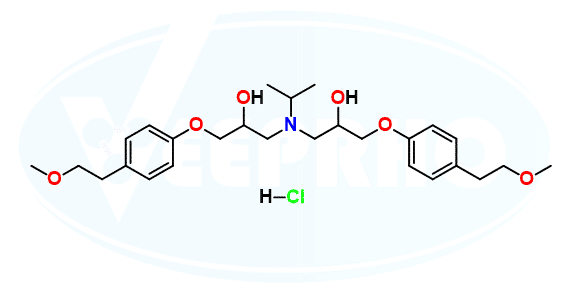
Parent: Metoprolol

Parent: Metoprolol / Metoprolol Tartrate

Parent: Metoprolol

Parent: Metoprolol

Parent: Metoprolol

Parent: Metoprolol

Parent: Metoprolol

Parent: Metoprolol
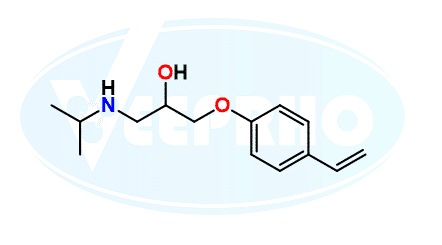
Parent: Metoprolol
![1-[4-[2-Hydroxy-3-[(1-methylethyl)amino]propoxy]phenyl]-2-methoxyethanone Hydrochloride](https://veeprho.com/wp-content/uploads/2022/07/1-5B4-5B2-Hydroxy-3-5B1-methylethylamino5Dpropoxy5Dphenyl5D-2-methoxyethanone-Hydrochloride.png "1-[4-[2-Hydroxy-3-[(1-methylethyl)amino]propoxy]phenyl]-2-methoxyethanone Hydrochloride")
Parent: Metoprolol

Parent: Metoprolol Impurites

Parent: Metoprolol
During the production and storage of Metoprolol, impurities may form, which must be controlled to ensure the drug’s safety and efficacy. Regulatory authorities, such as the U.S. Food and Drug Administration (FDA) and the European Medicines Agency (EMA), set guidelines on permissible impurity levels in Metoprolol formulations.
While taking Metoprolol, avoid alcohol, as it can exacerbate side effects like dizziness or low blood pressure. Also, avoid sudden discontinuation of the medication, as it can lead to rebound hypertension or worsen heart conditions. Discuss any new medications, including over-the-counter drugs and supplements, with your healthcare provider.
Metoprolol should be taken exactly as prescribed by your healthcare provider. It is usually taken with or immediately after a meal to enhance absorption and minimize side effects. Extended-release tablets should not be crushed or chewed. Consistent timing of doses is essential to maintain stable blood levels.
Metoprolol is considered high-risk because abrupt discontinuation can lead to severe rebound hypertension, heart attack, or arrhythmias. It requires careful monitoring, especially in patients with heart conditions or those taking other medications that affect blood pressure and heart rate.
Some patients report feeling tired, dizzy, or lightheaded after taking Metoprolol, especially during the initial adjustment period. These side effects occur because the medication slows the heart rate and reduces blood pressure. If these symptoms persist or worsen, consult your healthcare provider